




Manon Coubia’s Perspectives title is a restrained meditation on solitude, memory and place
Dir/scr: Manon Coubia. Belgium, France. 2026. 103mins
In this distinctive and assured debut from Belgian director Manon Coubia, three women, each at a different point in her life, pass through the same place. Individually, each works a season as a warden in an isolated mountain hut at the foot of Mont Chauffé in France’s northern Alps. There’s a steady flow of hikers and climbers using the modest facilities; there are moments of camaraderie and connection. But mainly, there’s solitude and the kind of enforced tranquility that invites introspection.
Falls into the natural rhythms of life on the mountain
Forest High is a work of subdued beauty which avoids moments of amplified drama – the staggering backdrop provides more than enough visual excitement to compensate – instead, teasing out small, intimately revealing details. It’s a personal work for the director, who grew up in the Alpine region and spent 10 consecutive years as a volunteer refuge warden during the summer season.
Coubia has previously explored the world of the mountains in several acclaimed shorts, including 2016’s L’Immense Retour (Romance), which won Locarno’s Short Film Golden Leopard. Following its premiere in Berlin’s Perspectives strand, Forest High’s picture’s handsome 16mm film photography and unconventional production process are likely to make it a talking-point title at further events and could catch the eye of adventurous arthouse distributors.
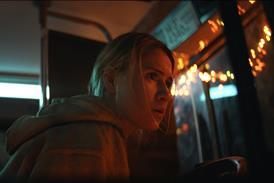
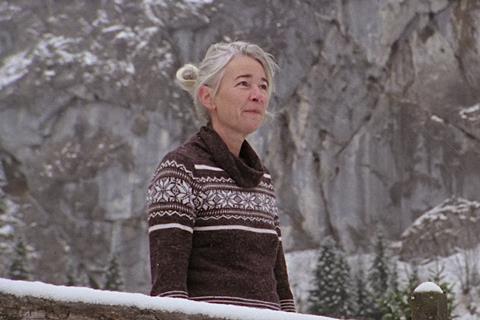
The three women are 30-something Anne (Salomé Richard, reuniting with Coubia having starred in her short film Pleine Nuit), Hélène (Aurélia Petit) and Suzanne (Anne Coesens), both in their fifties but from strikingly different backgrounds. Each of the actors was invited to spend a season at the Ubine mountain hut – the same one at which Coubia volunteered for a decade. Working with a small budget and skeleton crew, Coubia left much of the picture open to chance, drawing inspiration from the encounters between the actors and the real-life visitors who continued to use the hut. The changeable weather is another factor which shapes the story – we experience, through Suzanne’s eyes and ears, the serene isolation that comes with the first snow of autumn. And through Hélène’s restless night hikes, we share the oppressive heat of high summer.
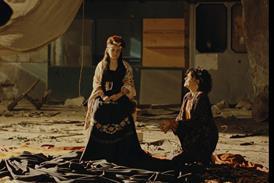
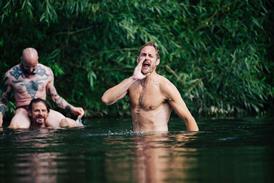
Of the three chapters, only the third is fully scripted: in this segment Suzanne plays host to a young soldier (Yoann Zimmer) who is grappling with his future and with the ghosts of the past. Throughout the film, but particularly in this section, there is a thematic kinship with Mascha Schilinski’s Sound of Falling (2025), and the sense that a place can harbour the essence of its history, that past lives leave traces in the fabric of a building. In one lovely scene in the first segment, an itinerant performance troupe put on a show in the tiny mountain chapel next to the hut. They read from a visitors’ book that dates back many decades, bringing to life voices and fragments of stories from the distant past.
The film explores natural history as well as human history. An ornithologist, camping near the hut in the first section of the film, is searching for traces of a rumoured breeding pair of Capercaillie (a large, turkey-like bird now believed to have disappeared from much of the Alpine region). He talks, evocatively, about the “pure despair” of being the very last of the species. And in a final coda, using rare footage from the archive of Cinémathèque de Montagne, Coubia shows the bird itself – a ghost from the mountains of old and a remnant of an ecosystem which is itself threatened with extinction.
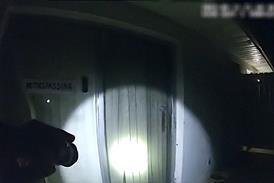
Coubia’s decision to shoot on 16mm means that the picture inevitably falls into the natural rhythms of life on the mountain. The solar-powered electricity of the hut wouldn’t be adequate to support much in the way of additional lighting so, outside of daylight hours, the velvety glow of the wood-burning stove is the main source of illumination.
Equally as important in evoking the textures of mountain life is the sound design, with the bright layers of birdsong bringing a three-dimensional quality to the mossy darkness of the forest glades. Hélène, we learn midway through the story, is a poet who draws inspiration from the mountains and the nature that surrounds her. The same could be said of Manon Coubia.
Production companies: The Blue Raincoat (BE), Aurora Films (FR)
International sales: Rai Cinema International Distribution, fulvio.firrito@raicinema.it
Producers: Jérémy van der Haegen, Nicolas Rincon Gille, Manon Coubia, Tom Durand-Bonnard, Katia Khazak, Charlotte Vincent
Cinematography: Robin Fresson
Editing: Théophile Gay-Mazas
Music: François Chamaraux
Main cast: Salomé Richard, Aurélia Petit, Anne Coesens, Arthur Marbaix, Yoann Zimmer, Alba Rincon Gille, Jean-Claude Duret, Jean-Pierre Jacquier, Michel Besson