


Rafiki Fariala draws on his own experiences as a Congolese refugee for this authentic Un Certain Regard title
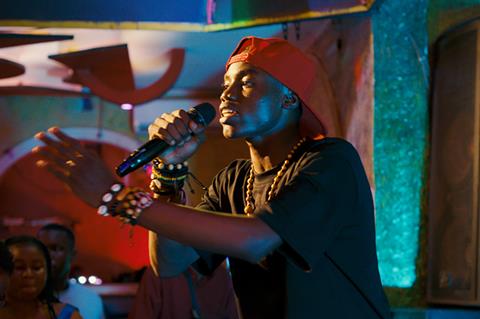
Dir: Rafiki Fariala. Central African Republic/Democratic Republic Of The Congo/France/Italy. 2026. 95 mins
Robert, 17, is just about hanging on by his fingernails in Bangui, the capital of Central African Republic. His parents are in prison, caught in the bureaucratic purgatory of being refugees; he has four young siblings to look after; his final school exams are looming; and he dreams of being a musician. This debut feature from Rafiki Fariala – who, like Robert, grew up as a Congolese refugee in Bangui – is warm, likeable and human. It’s heavily autobiographical, with personal experiences spun into a documentary-inflected realist drama. Its biggest strength is a strong ring of truth, not least because of the tender performances Fariala and his team elicit from a cast entirely made up of non-professionals.
A rich portrait of the refugee experience
Fariala’s earlier documentary We, Students! was a portrait of Fariala and his friends trying to make it through university in Bangui, and premiered in Berlinale Panorama in 2022. Congo Boy is the next step in Fariala turning his life and struggles into art, which is also one of the themes of the film – in-between washing cars, selling water or hesitantly buying sanitary towels for his younger sister, Robert writes lyrics which reflect his experiences. The film, which features dialogue in Lingala, Sango, Swahili and French, premieres in Cannes Un Certain Regard, and festival programmers will be attracted by its gentle humanism and bursts of crowd-pleasing energy. More daring distributors could try to build a modest, specialised audience, as Robert himself does in the nightclubs of Bangui.
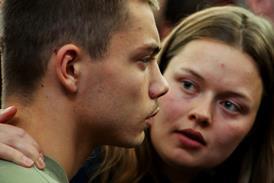
Robert (Bradley Fiomona Dembeasset) has his hands full. In exchange for their labour, he and his four siblings, Espérance (Christy Djomanda Louba), Aurélie (Rosiana Kotozia), Jacqueline (Gloria Ambacko) and Daniel (Pétruche Mbomba), live in a compound owned by a military colonel – itself a huge risk as conflict is raging and there are armed militias all over the city. The danger is compounded by Robert and his siblings being refugees from nearby The Democratic Republic Of The Congo, a fact which Robert’s dad stresses that he needs to keep a secret wherever he can. Even Robert’s best friend, César (Dieufera Sana), doesn’t know that his friend is Congolese: César is surprised when the school authorities charge Robert more (15,000 francs rather than 10,000) to take his final school exams, just because he’s a foreigner.
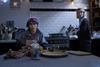
Fariala and screenwriter Tommy Baron deftly work small details like this into their screenplay, making the film a rich portrait of the refugee experience. Such facts could feel academic if they weren’t accompanied by the believable relationships we witness between Robert and his siblings. Their solidarity is the heart of the film, and cinematographer Adrien Lallau captures touches, glances and other small interactions between them which ground the film in lived experience.
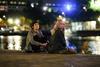
The film is shot entirely on location, with much of it filmed at night, and Lallau’s cinematography, often handheld and on the move, gives us an immersive view of life in the backstreets of Bangui. Meanwhile César Simonot’s judicious editing gives the film strong momentum and keeps its ample city scenes tied closely to the movement and detail of the story.
Where Congo Boy feels more schematic is in its subplot about Robert’s desire to make it as a musician. This search for artistic expression and success bookends the film – and it gives it an endearing musical lift. But it isn’t the primary focus of much of the story as there’s so much else going on in Robert’s life. The central tension becomes about whether Robert and his family make it through the day safely, with enough to eat, rather than whether he will fulfil his artistic ambitions. It makes the final act feel slightly forced when everything that has come before feels so natural and lived-in.
But the musical angle adds hope. What also gives the film a boost whenever it threatens to be overly melancholic is Bradley Fiomona Dembeasset’s naturalistic performance as Robert. He draws the audience in and makes us care strongly about the perils faced by Robert and his family. Lillo Morealle’s light, drum-heavy score also helps to counterbalance the more bleaker passages of the story.
Production companies: Makongo, Unité, Karta Film, Kiripi Film
International sales: The Party Film Sales, sales@thepartysales.com
Producers: Vicky Nelson Wackoro, Dieudo Hamadi, and Caroline Nataf
Screenplay: Rafiki Fariala, Tommy Baron, Boris Lojkine
Cinematography: Adrien Lallau
Editing: César Simonot
Production design: Raïhanatou Ibrahim
Sound: Ari Cuffini-Fabre
Music: Lillo Morealle, Rafiki Fariala
Main cast: Bradley Fiomona Dembeasset, Pétruche Mbomba, Gloria Ambacko, Christy Djomanda Louba, Rosiana Kotozia, Dieufera Sana