




Maksyom’s intesely personal documentary, filmed over three years, recently received a special mention at Sarajevo
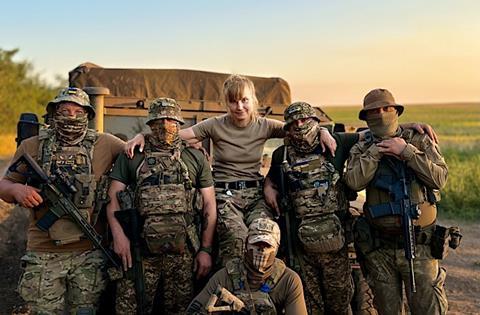
Dir: Helena Maksyom. Romania/Netherlands/Germany/Ukraine. 2026. 104mins
The raw reality of war is captured by documentarian Helena Maksyom as she picks up a gun without putting down her camera after the Russian invasion of Ukraine in 2022. This unvarnished view of life on the frontline, shot over the course of three years or so, is – like many documentaries from the warzone – a difficult watch at times. Yet this distinctive, highly personal perspective is the stand-out feature of Don’t Ask Me If I Killed, which received a special mention at Sarajevo having previously won the Docu/Ukraine Best Film prize at Docudays. Further festival play seems assured.
Avoids politics in favour of the personal
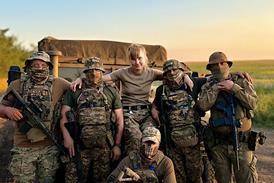
Maksyom, who previously made the equally intimate documentary Everything Will Not Be Fine, about the aftermath of the Chernobyl disaster, had plans for 2022. They included making a film about the care system in her homeland, learning to play the piano and visiting the Pacific Ocean. Yet all that was put on hold when Russia invaded Ukraine. We initially see Maksyom helping with evacuations before she signs up for the National Guard; the only woman in her unit.
The ‘on the ground’ nature of Maksyom’s footage means that while not giving chapter and verse on dates, places and times, Maksyom builds a multifaceted picture of what is happening in Ukraine. There is, as one would expect, considerable amounts of footage of the National Guard unit itself, both during skirmishes and in their off-hours. Additionally she talks to Ukranians who are fleeing the conflict zones, and those who have decided to remain. These include one elderly lady, Ohla, who pointedly refused to evacuate with her family. “Whatever happens, happens,” she says.
This stoicism is a recurrent feature in a film that avoids politics in favour of the personal. The grind of constant conflict is brought home not just by the video diaries from Maksyom that punctuate the film, but in the conversations she has with others. “At first it was terrifying but now we don’t even care any more,” one soldier tells her as the now-familiar sound of bombs echoes in the distance. Elsewhere, a Ukrainian soldier points out to his Russian prisoner that the man’s five-year-old child will be on a frontline himself in 20 years, unless Russian president Vladimir Putin is stopped.
The impact of war on loved ones is also highlighted: one soldier is overjoyed at the opportunity to spend 90 minutes with his family; Maksyom has moving conversations with her own ailing mother. The sense of time operating differently during war is constant, from the agonising few moments as soldiers try to scramble to safety to Maksyom’s observation that “sometimes a day feels like 10 years”. Throughout, small details stand out, from an impromptu birthday cake to the outsize standard issue underwear Maksyom is given when she signs up.
The film is straightforwardly shot, either with handheld or helmet cameras, and sensitive sound design gives added resonance to moving moment, such as when loved ones collect medals of their fallen family members. Don’t Ask Me If I Killed is a lament for the cycle of conflict, an act of defiance and a memorial for those who have fallen during the course of the war. A poignant and shockingly long list of those who have been killed or who are missing in action is listed in the credits alongside this simple dedication: “For my fallen brothers who kept me alive.”
Production companies: A Pirvu A Adrian PFA Production, Een van de jongens, Perennial Lens, Jeanne Dovhych Production
International sales: First Hand Films, sales@firsthandfilms.com
Producers: Adrian Pirvu, Renko Douze, Yasmin C Rams, Jeanne Dovhych, Hasse van Nunen
Cinematography: Helena Maksyom
Editing: Svitlana Zaloga, Helena Maksyom, Augustine Huijsser