





Dir: Brendan Canty. Ireland. 2025. 70mins
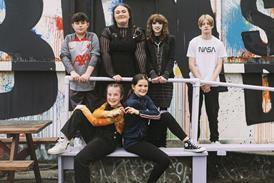
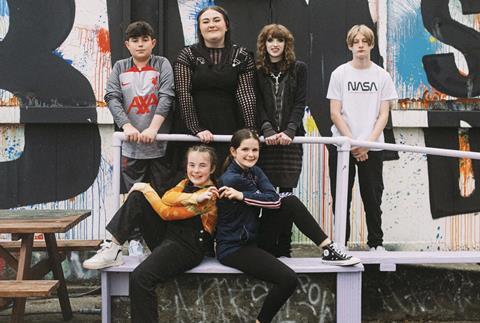
Language is power and creativity is the brightest road to self-expression in Gealtra. Brendan Canty’s slight but engaging documentary (the title translates as ‘gang’) follows a group of young people from Cork as they embrace the Irish language to create rap music that is both personal and empowering. The infectious enthusiasm of the youngsters feeds into the spirit of a film that has secured a festival welcome from Cork to Toronto’s Hot Docs, Munich and Galway, and further berths seem likely.
A celebration of the way these youngsters find their voice
Canty previously directed Christy (2025), which world premiered at Berlin in 2025 and went on to win Best Film at the Irish Film and Television Awards. Gealtra very much feels like a companion piece as it returns to the streets of the north Cork suburb of Knocknaheeny and the community arts collective The Kabin Studio, established in 2012. Canty provides little in the way of context for this visit, but interweaves the story with languorous visuals capturing the housing estates and industrial wreckage. Initially, young local Sophia is captured in slow motion as she skates through a warm vision of vibrant blue skies and emerald green trees. It could be the start of a fairytale.
Sophia is one of the core youngsters at The Kabin Studio where poet, rapper and spoken-word artist Seamus Barra O Suilleabhain arrives, declaring, “I’m here to help you write songs in Irish”. Indeed, Gealtra plays like Kneecap (2024) for kids and the heart of the film is this act of creation as individuals are encouraged to find their voice, tell their story and surrender any inhibition about writing or performing in their ancestral language. The political element is gentle and understated. Canty’s focus is on the individuals and their personal journeys, rather than delving into the history of their communities and language.
Observational in tone, Gealtra allows the viewer to eavesdrop on the conversations and writing sessions in which new songs are created. We witness aspiring barber Bucky write about the way the English language oppresses. Eibhlin talks about how she was made to feel different at school, and how rapping had helped build her confidence. The irrepressible duo of Sophia and Heidi are game to try even the most tongue-twisting and challenging lyrics. Rosaleen has grown from being a member of the group to a mentor, while the slightly older Darren Stewart explains his intention to use the words of Irish-language poet Sean O’Riordan to create a rap that challenges the dominance of Shakespeare.
Under the watchful, supporting eye of Seamus, and Gary McCarthy from The Kabin Studio, Gealtra becomes a celebration of the way these youngsters find their voice. We come to know them individually through scenes at home, with friends, in public performances and in conversation on walks past a derelict water tower or in fields of yellow ragwort that surround Knocknaheeny.
Gealtra never cuts that deep but it takes a genuine delight in the achievements of others, culminating in a loud and proud performance of their song ’Failte Go Knocka’ (’Welcome To Knocka’). The youngsters here find their voices and feel seen. There is also a persuasive sense that music has a significant role to play in the the grass roots revival of the Irish language.
Production company: Feel Good Lost
International sales: Feel Good Lost. brendan@feelgoodlost.ie
Producer: Maire Ni Dhuinnin
Screenplay: Brendan Canty, Seamus Barra O’Suilleabhain
Cinematography: Roman Bugovskiy, Colm Hogan
Editing: Juangus Dinsmore, Allyn Quigley
Music: Garry McCarthy, Tom Morris


No comments yet