








Levan Koguashvili’s black-and-white Venice Spotlight title finds its own distinctive rhythm amid poverty and tradition

Dir: Levan Koguashvili. Georgia/Switzerland/Luxembourg/Bulgaria/Turkey/ Norway/Saudi Arabia. 2026. 118mins
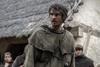
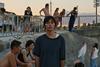
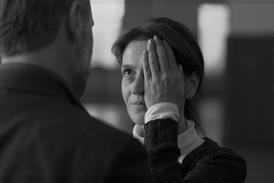
In Guria, the latest film from Georgian director Levan Koguashvili (2021 Red Sea winner Brighton 4th, 2013’s Blind Dates), the viewer is immersed in a village community in the western coastal region of the title, during the immediate post-Soviet period. Shot in gorgeously detailed black-and-white, the film recalls the early work of fellow Georgian Otar Iosseliani but slowly finds its own groove, mixing folklore and old traditions – including polyphonic singing – in a story that suggests progress has a hard reaching some of the world’s more out-of-the-way corners. Premiering in Venice’s Spotlight, the film should find a warm berth at festivals elsewhere.
The rich black-and-white cinematography’s fine grain and nuanced grading deserve special mention
The film is set in 1992 but the choice of black-and-white cinematography gives the story a more timeless feel. Most of the major geopolitical events seem of little concern to the protagonists on the Black Sea, who are stuck in their old ways and whose lives don’t seem to have changed for the better just because the USSR collapsed.
In this rural community, there’s a sense of social cohesion amongst the villagers but also of rival clans that have hated each other for generations. Things come to a head at the Miss Guria 1992 beauty pageant, in which local teenage girl Eka (Anamaria Kamladze) participates. Two very different boys, the brash Beso (Davit Natsvaladze) and the more thoughtful Achi (Sergi Kviloria), have an eye on her; a seemingly innocent setup that’ll have far-reaching consequences.
Achi’s father is Zuriko (Kakhaber Tcholadze), a widowed 40-something hazelnut farmer who tries to live a decent and reasonable life. He is the closest Guria has to a protagonist, though it would be more accurate to describe the film as a group portrait. As a counterbalance, Beso’s old man (Vakho Chkhartishvili) is a hotheaded bandit who gets mixed up in all sorts of get-rich-quick schemes that don’t necessarily end well. To Koguashvili’s credit, it’s clear that people are desperate for anything that can help them make a semi-decent living, as there don’t seem to be many options. As befits a choral narrative, the film is generally more interested in group dynamics rather than finely observed characters and star turns. This does make it harder to latch onto any one character.
The screenplay, by Koguashvili, Boris Frumin and Georgi Kekelidze, and the editing, by Pia Dumont, try to balance the slice-of-life qualities that evoke the place and people with the specific events that drive the story forward. The former more often win out, sspecially in the first hour, with some darkly humorous sequences among the highlights – including a dual operation on two side-by-side beds because there’s only electricity for one light in the hospital’s operating room. The story becomes more prominent in the second hour, when one unexpected turn of events leads to ramifications that few could have foreseen.
Gigi Samsonadze and Giorgi Shvelidze are jointly credited for the film’s rich black-and-white cinematography, whose fine grain and nuanced grading deserve special mention. It is the standout element of a technical package that also features polyphonic singing, characteristic of the region and a fascinating metaphor for the idea of community: each voice must sing its own part to create harmony.
Production companies: Kino Iberica, Cineworx Filmproduktion, Tarantula Luxembourg, Art Fest, TatoFilm, Maya Film, Staer, Red Sea Fund
International sales: Kino Iberica, olena@tatofilm.com
Producers: Olena Yershova, Levan Koguashvili, Boris Frumin
Screenplay: Boris Frumin, Levan Koguashvili, Georgi Kekelidze
Cinematography: Gigi Samsonadze, Giorgi Shvelidze
Production design: Kote Japaridze
Editing: Pia Dumont
Music: Giorgi Gordeladze
Main cast: Kakhaber Tcholadze, Natia Nikolaishvili, Vamekh Jangidze, Davit Natsvaladze, Anamaria Kamladze, Sergi Kviloria, Vakho Chkhartishvili