


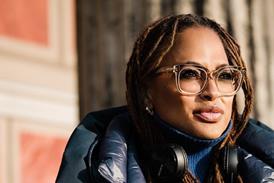
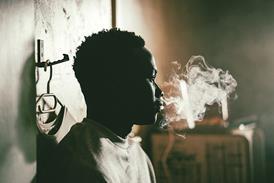

Roschdy Zem, Marina Fois and Françoise Lebrun star in Fellipe Barbosa’s Marrakech premiere
Dir: Fellipe Barbosa. France/Brazil/Morocco. 2026. 102mins
Leila And The Night is a clear-eyed and moving drama that circles the days, weeks and months surrounding the death of French-Moroccan photographer Leila Alaoui in Burkina Faso in January 2016. Alaoui was shot during an attack by Islamic militants and died several days later. This film by Brazilian writer-director Fellipe Barbosa – who was a close friend of Alaoui – resists depicting the exact circumstances of her killing without sidestepping its visceral impact on her loved ones.
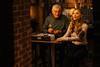
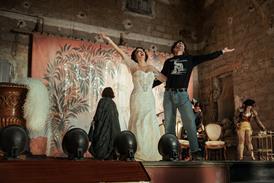
Barbosa directs multiple ensemble scenes so that they feel lived-in and true
The French and Arabic-language film serves as both a tribute to Alaoui and an intelligent, upsetting portrait of sudden loss and grief. It’s based on the book Off To Ouaga by Alaoui’s father, Aziz (played in the film by Roschdy Zem), with Alaoui’s mother, Christine (Marina Foïs), also contributing to a screenplay that is rich in personal detail but succeeds in taking a necessary half-step back from its subject (assisted by Caroline Champetier’s restrained, observant cinematography). It’s Barbosa’s seventh feature film; 2017’s Gabriel And The Mountain played in Critics’ Week at Cannes and also explored the death of an old friend abroad, this time in Malawi, although here the focus is on those left behind.
Leila And The Night has its world premiere in Marrakech – the city where much of it is set and shot – and will be released in France by Condor Films. Its involving and sensitive handling of its real-life subject matter, coupled with strong performances (especially from Zem and Foïs) should appeal beyond those already aware of Alaoui. Its multi-generational story, which takes in Alaoui’s friends and siblings, as well as her parents and grandmother (an excellent Françoise Lebrun), allows for subtly different perspectives on grief.
Alaoui’s parents are at their home in Marrakech when they receive the news that their daughter has been injured during an attack on Café Cappuccino in Ouagadougou, the Burkinabe capital. (Over 30 people died in the same attack.) Details of her condition and her fate are drip-fed across several phone calls – devastating for her parents and intense for an audience. But before then we see scenes of Alaoui (Nina Zem; Roschdy’s daughter, making for poignant casting) in Paris, dining with her father, sister and friends the night before heading to Burkina Faso on a photographic assignment for Amnesty International – an evening to which we later return.
We briefly see Alaoui in Burkina Faso with her driver, but that’s the last we see of her: Barbosa focuses on the impact of her death rather than the event. It’s an approach comparable to The Son’s Room (2001), Nanni Moretti’s study of parental grief, which similarly observes the rituals and routines that follow death in distressing detail.
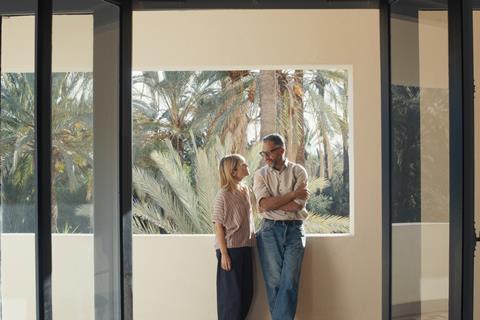
The diverging and overlapping responses of the two parents offer some of the film’s most acute observations. Aziz does not immediately hold Christine when they discover their daughter has died, and he is cutting and abrasive with his daughter’s fiancé, whom he clearly dislikes. Christine is softer, more tactile, more openly raw, looking for signs and symbols everywhere to explain Leila’s death. The depiction of their relationship is not sugar-coated and we are reminded more than once that Leila had suggested they divorce. Leila herself is less fully drawn because we spend little time with her, although the film is bookended with representations of her work and Nina Zem’s brief portrayal of her is warm and engaging.
Barbosa directs multiple ensemble scenes – waiting, mourning, burying, remembering – so that they feel lived-in and true. There’s intense pain and emotion in the story, but the screenplay and the direction, aided by Arthur Bartlett Gillette’s understated, string-led score, swerve easy dramatics in favour of a slow accumulation of pain and despair. The eventually give way way to some acceptance and a touching sense of family members and friends finding their own ways of honouring Leila’s memory – including Barbosa himself.
Production companies: Damned Films, Migdal Filmes, Lions Production
International sales: Lucky Number, hello@luckynumber.fr
Co-director: Othman Zine
Producers: Yohann Cornu, Iafa Britz, Hicham El Ghorfi
Screenplay: Fellipe Barbosa, Luna Grimberg, Othman Zine, Christine Alaoui
Cinematography: Caroline Champetier
Production design: Rabaa Rahmouni
Editing: Waldir Xavier
Music: Arthur Bartlett Gillette
Main cast: Roschdy Zem, Marina Foïs, Sayyid El Alami, Oulaya Amamra, Françoise Lebrun, Nina Zem