






Vietnamese-Canadian filmmaker Carol Nguyen turns her camera inward for impactful IDFA competition title
Dir: Carol Nguyen. Canada. 2025. 73mins
Carol Nguyen’s first full-length documentary feature orbits around an emotional black hole: the death of her uncle during a psychotic episode two decades ago. It’s a delicate, gently probing attempt to understand a family trauma that has been pushed out of mind, but is far from healed. Still Night, Burning House also becomes a bridge between Nguyen’s Canadian birthplace and Vietnam, the country from which her parents fled in the 1980s. Both journeys are connected. This poignant documentary shows how cutural and emotional displacement can mirror, perhaps even feed off, one another.
Shows how cutural and emotional displacement can mirror, perhaps even feed off, one another
The material developed here was first explored in the director’s prizewinning 2019 short No Crying at the Dinner Table, which after a long festival run ended up being streamed on the New Yorker’s video platform. There, Nguyen created a work of formal beauty that was also a kind of family therapy session. Still Night, Burning House, which screened in IDFA’s Inernational Competition after premiering at TIFF, is more ambitious. It not only leads the director’s family to some kind of closure but brings a cermonial quality to a film that is also a second funeral rite for Uncle Thach.
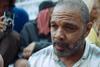
Here too, an interview with Nguyen’s father Ngoc about his brother’s death forms the film’s emotional bedrock. Ngoc has an expressive face, one that seems to act as a window on some deep well of sadness. He tells his daughter that on the evening Thach died, he was with him until quarter of an hour before. He left him shortly before Thach’s wife returned, and in that brief interval, his brother threw himself off the roof of the house, which he thought was on fire.
Still Night, Burning House is in part about the kind of cultural imprinting that makes such revelations so clearly difficult. Ngoc’s long silences are as eloquent as his words. Hundreds of pages of Canadian medical documents charting Thach’s diagnosis of schizophrenia and frequent hospital visits allow the director to expose another taboo. Mental illness, it becomes clear, was seen as something not to be discussed within Vietnamese families – at least back then.
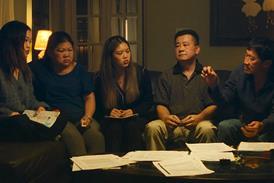
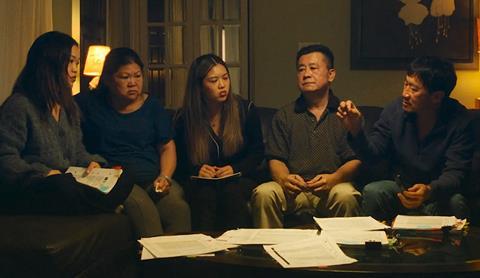
Even now, after decades in Canada, Ngoc describes his brother’s first episodes, which manifested while they were in an Indonesian refugee camp, as Thach “getting rowdy”. These typewritten psychiatrists’ notes, which Nguyen has her aunt, father and cousins read out in a touchingly awkward filmed session, describe tensions between Thach and his brothers, or his love of playing the guitar.
Around its midpoint, the film pivots to chart a family trip back to Vietnam, with Nguyen’s father, his surviving brother, and her aunt Phan and cousins Jennifer and Jenny – Thach’s wife and daughters. Half travelogue, half healing journey, this section ambles along at times but, in its best moments, takes on a dreamlike, elegiac quality. Thach released the caged birds he loved to collect a week before he died; here, those of us not grounded in Vietnamese funeral traditions are subtly and and wordlessly taught, via footage of locals carrying out the rites for loved ones, that this is a Buddhist tradition.
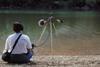
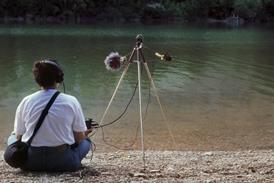
Arie Verheul Van De Ven’s sparingly used soundtrack, which builds emotion from swarms of plucked string notes that capture the sound of a traditional Vietnamese dan tranh zither, merges with a sound design that gives the sounds of nature, footsteps, cowbells and Buddhist temple chants a hyperreal, amplified feel. Bookending the film is a motif that pushes the boundaries between documentary and fiction – a solitary ox-drawn cart, once the carriage of choice for Vietnamese funerals. Seen reflected in a twilight lake in the opening sequence, it silently joins a procession of other similar afterlife ferries in the cathartic final scene.
Production company: Portage Films, National Film Board of Canada
International sales: National Film Board of Canada info@nfb.ca
Producers: Audrey-Ann Dupuis-Pierre. Ariel Nasr, Robert Vroom
Cinematography: Juliette Lossky
Editing: Anouk Deschenes
Music: Arie Verheul Van De Ven