











Swedish filmmaker Nathan Grossman’s CPH:DOX title was made in collaboration with the Korubo people

Dir: Nathan Grossman. Sweden/Denmark/France. 2025. 186mins
In 1996, Brazilian official Sydney Pousselo, then head of the Department of Indigenous in Isolation, led an expedition into the Amazon to make contact with the Korubo, one of the last remaining communities living in isolation. Accompanying him were several journalists, including Swedish filmmaker Erling Soderstrom. Some of the Swede’s footage was later made into a documentary, but much remained unseen. Thirty years after the initial contact, this agile, insightful film revisits the encounter, this time taking into account the experience and viewpoint of, and consequences for, the Korubo people.
Made in collaboration with the Korubo people
The second feature length documentary from Swedish filmmaker Nathan Grossman, following his multi award-winning Greta Thunberg portrait I Am Greta (2020), is a fascinating work – a gripping account of an adventure that then deftly flips the narrative, asking uncomfortable questions about this event and, more generally, about the medium of documentary itself. Climate issues also provide an access point for this picture: the fragile balance of life for the indigenous tribes in the Amazon’s Javari Valley region is threatened by ecological pressures from illegal logging to depleted water resources. Yet the meat of the picture lies in its interrogation of who has the right to tell a story, who controls the narrative and who profits from it? Amazomania should find keen interest following its premiere in CPH:DOX competition, both at further festivals and also potentially among specialist documentary distributors.
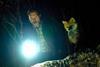
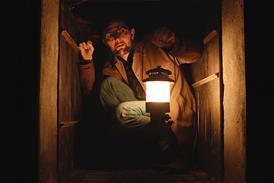
There’s a telling moment at the very start of the film. Soderstrom has trained his lens on himself and, while tying his boot laces in preparation for the expedition, talks gravely to the camera about the risks involved. “Previous attempts to make peaceful contact have failed. Over 200 people have been killed.” He adds, portentously, “No one knows how this will end.” But what’s revealing is how he describes the mission, as “humans” entering the Indians’ territory for the first time. It was presumably a slip of the tongue, but it offers a shocking insight into the casual othering of the Korubo community by curious visitors.
He was right, however, about the uncertainty surrounding the outcome of the expedition. The Korubo had earned the nickname “clubbers” for their preferred hunting technique of bludgeoning the skulls of prey with heavy wooden batons. The same attack method had been employed in the escalating tensions with the loggers and fishermen who had been plundering the region for financial gain. One journalist shows Soderstrom his stab vest – protection, he hopes, against an attack. Soderstrom, meanwhile, plans to de-escalate any tension by flashing the peace sign.
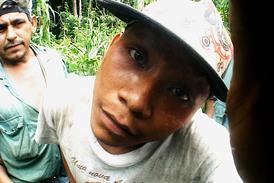
The meeting between the expedition members and the Indigenous community is both fascinating and deeply uncomfortable. There’s a greediness to the way the encounter is filmed. Lenses are intrusive and everywhere. The agitated energy is aggravated by the fact that some of the Indigenous people assume that the camera Soderstrom is holding is a form of gun. The rapacious hunger for gathering images of the Korubo is not so very different from the colonial pillaging of resources from other communities in other centuries.
Another perspective on the encounter is evident later, when the digitised footage is shown to a Korubo translator who reveals just how close the Western press corps came to perishing. Soderstrom, who became a regular visitor to the region, returns once again to the Javari Valley to reconnect with the Korubo people in 2023. The footage captured further reframes the relationship between the documentarian and his subject.
Soderstrom’s perspective on the community is romanticised – they are, he gushes, free from the trappings of capitalism and unsullied by the avarice of civilisation. The Korubo, meanwhile, demand restitution and recompense for the invasions into their culture and the profits made from filming them. His nose firmly out of joint, Soderstrom gets huffily defensive and seems unable to answer the fundamental question of “why did you come so often?”
As befits a rigorous self-examination that asks tricky questions, Amazomania attempts to redress the fundamental imbalances of previous encounters. The film was made in collaboration with the Korubo people, who are equal stakeholders in the production.
Production companies: B-Reel Films
International sales: Autlook stephanie@autlookfilms.com
Producer: Cecilia Nessen
Cinematography: Nathan Grossman, Erling Soderstrom, Diego Lajst
Editing: Jordana Berg, Nathan Grossman
Music: Josefine Skov