



Meryl Streep, Anne Hathaway, Emily Blunt and Stanley Tucci return for glamorous, predictable feature
Dir: David Frankel. US. 2026. 119mins
In the two decades since its release, The Devil Wears Prada has become something of a modern classic, thanks largely to its eminently quotable, whip-smart observations about the world of fashion and its enduring sense of style. It’s unsurprising, then, that this sequel (again directed by David Frankel) is cut from exactly the same cloth, deliberately designed to be a narrative retread – albeit with a few Gen Z updates – that should delight existing fans.
Relies almost completely on indulging the exclusive, cut-throat world in which it operates
With The Devil Wears Prada taking $327m worldwide on its release in 2006, it’s a smart strategy. That familiarity, plus returning cast members Meryl Streep, Anne Hathaway, Emily Blunt and Stanley Tucci, is likely to draw big audiences when the film rolls out internationally from April 29. (It hits US and UK/Ireland cinemas on May 1.)
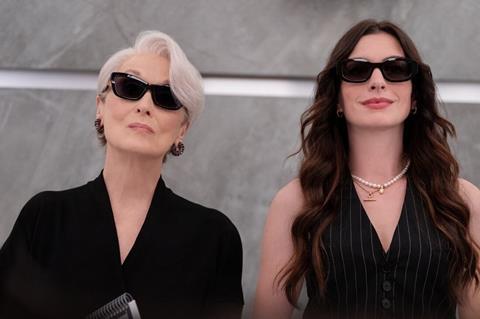
Twenty years after the events of the first film, and the bullish Miranda Priestly (Streep) is still the editor-in-chief of fashion magazine ‘Runway’. Her former awkward, out-of-her-depth assistant Andy (Hathaway) has moved on to become a prizewinning journalist at New York’s most respected news outlets. Yet returning screenwriter Aline Brosh McKenna (adapting from the novels by Lauren Weisberger) ensures that events soon conspire to get Andy back in the ‘Runway’ offices, as their newly-hired features editor. She reteams with Miranda’s right-hand man, fashion director Nigel (Tucci), who remains fiercely loyal to Miranda despite her unconscionable betrayal of his trust in the first film. Catty former first assistant Emily (Blunt) is no longer there, having moved on to become a high-flier at Dior.
Conveniently, Miranda claims to have no recollection of Andy from her assistant days – despite giving her the hard-won recommendation that launched the next phase of Andy’s career – and that dramatic contrivance resets the dynamic between the characters right back to where it was in 2006. And so award-winning journalist Andy is reduced to chasing her tail, going to increasingly desperate lengths to appease the aloof, interminably unimpressed Miranda.
Like the rest of the callback cast, Hathaway steps back into the role of Andy with ease. It is, however, a bit of a thankless task, as she finds herself retreading the same narrative ground from 20 years ago – albeit with a better wardrobe. Andy is given a bit of a life outside of ‘Runway’, including a tentative romance with property developer Peter (Patrick Brammell), but, as the magazine again consumes her life, it all feels a bit underdeveloped and, dare we say it, last season. (Hathaway can currently be seen doing far more interesting things in David Lowery’s similarly fashion-themed Mother Mary).
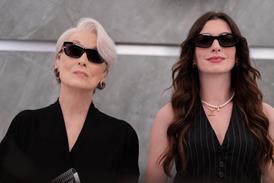
Famously inspired by Vogue editor Anna Wintour, Miranda also remains unchanged as the embodiment of weaponised chic, again played with enjoyably ice-cold precision by Streep. This time, however, we do get more of a peek beneath the armour; Miranda now has a partner, Stuart (an underused Branagh), to whom she shows a softer side, and is rocked by concerns about the future: both her own, now that she is in her 70s and potentially facing an unwanted retirement, and of the print media itself.
That’s a concern shared by Andy, who has her own experience at the crumbling coalface of news journalism, and it’s enough to see her fight to save both the magazine and Miranda’s position; a plan that involves new ‘Runway’ owner Jay Ravitz (BJ Novak), Emily and her partner, the deeply unpleasant billionaire tech wizz Benji Barnes (Justin Theroux). It’s all a bit convoluted and melodramatic, designed more for high-stakes drama than any real-world reflection, but Blunt’s dry-witted Emily remains an absolute joy, and snags all the best lines. “May the bridges I burn light my way” deserves its own spot on a t-shirt.
That ‘Runway’ is no longer the bullet-proof bastion of fashion publishing, forced to rely on courting advertisers and weathering budget cuts, brings this glossy film somewhat up to date. Other nods to the changed landscape include the ever-presence of influencers, the insidious influence of smartphones and social media, the fact that Miranda’s new first assistant, Amari (Bridgerton’s Simone Ashley, excellent), has to constantly remind her boss that comments about weight and appearance are no longer to be tolerated. Sharply observant second assistant Charlie (Caleb Hearon) is also a welcome new addition to the ‘Runway’ offices.
But, of course, The Devil Wears Prada franchise relies almost completely on its looks, and on indulging the exclusive, cut-throat world in which it operates, so any evolved cultural awareness is drowned out by the stunning costuming and beautiful bodies. (For all the film’s claims of inclusivity, there is not a great deal of physical diversity to be found on screen.) There’s no denying that it looks gorgeous, costume designer Molly Rogers raiding the archives of designers from Prada and Armani to Gabriela Hearst and Sa Su Phi to combine the effortlessly stylish with the impossibly glamorous (and with plenty of cerulean blue). Similarly, cinematographer Florian Ballhaus shoots New York City and, later, Italy with a glossy lens, playgrounds of the fit and the fabulous.
This sequel does, however, try to confront the issues that dogged the first film: that powerful women must by necessity be bitches, that ambitious women should be punished for the audacity of putting themselves first. Here, Miranda is acutely aware of what her career has cost her – time with her children, long-term relationships – but makes no apologies for it, wouldn’t change a thing. Equally, Andy is presented as happy and successful as a single working woman, and Emily also balances her work and her family in her own unique way. As if to compound that point, the final shot, a smooth pan-out from ‘Runway’’s New York offices, is a lovely homage to Mike Nichols’ Working Girl (1988), that seminal celebration of female success and a clarion call for professional equality.
Production company: Wendy Finerman Productions
International distribution: Walt Disney
Producer: Wendy Finerman
Screenplay: Aline Brosh McKenna, based on characters by Lauren Weisberger
Cinematography: Florian Ballhaus
Production design: Jess Gonchor
Editing: Andrew Marcus
Music: Theodore Shapiro
Main cast: Meryl Streep, Anne Hathaway, Emily Blunt, Stanley Tucci, Simone Ashley, Caleb Hearon, Justin Theroux, Lucy Liu, Kenneth Branagh, BJ Novak