









This year’s BFI London Film Festival – the fourth curated by Kristy Matheson – is blessed with a stellar lineup of Screen Talks and two big animations receiving their world premieres.

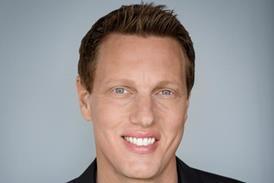
Programme lock is the busiest and most stressful time for any film festival team, but for BFI London Film Festival (LFF) director Kristy Matheson, curation for the 2026 edition came with an extra pressure: the Australian was also taking the UK government’s Life In The UK test to achieve indefinite leave to remain status.
“I was doing a lot of studying about the history of the UK while I was locking programme,” says Matheson. “There’s a lot about laws and bylaws. There’s a lot of courts here – the sheriff court, the magistrates’ court. The questions are quite random, and it’s a whole book. It was a lot of gymnastics for my brain.”
The test now happily passed, Matheson can focus on hosting her fourth LFF as festival director and the 70th edition overall, kicking off on October 7 with Simon Stone’s Elsinore, and closing 11 days later with Jesse Eisenberg’s The Debut. This year’s edition includes a strong roster of talent in the Screen Talks strand, as well as providing world premieres for a pair of high-profile animated features – Laika’s Wildwood and Brad Bird’s Netflix-backed Ray Gunn. In total, there are 10 features with world-premiere status, up from seven last year.
Matheson is willing to disclose that securing a world premiere status is often a happy accident. “World premieres is not the organising principle for the LFF,” she says. “The conversation on Wildwood was never, ‘If it’s not a world premiere, we don’t want to talk to you about the film.’ It was always, ‘We just want to see the film, and know it will be ready in time.’
“So often with these things, you are at the fortune or misfortune of the broader life of the film,” she adds. “In this case, we were the lucky recipients of a release strategy that put the film a little bit later. There’s a big fanbase for Laika here, and for this territory it’s a great launch for the film.”
Dream team
This year’s Screen Talks programme features Sofia Coppola at LFF’s premiere venue – the Southbank Centre’s 2,200-capacity Royal Festival Hall – plus Andrew Scott, Ava DuVernay, Cynthia Erivo, Eisenberg and John Malkovich at BFI Southbank; Brad Bird, James Gray, Mahershala Ali, Naomi Ackie, Javier Bardem and Robert Eggers at other London cinemas; and Danny Boyle at Home in Manchester. “It’s our dream scenario – a good balance of performers and directors,” comments Matheson.
LFF simultaneously screens a selection of titles with 10 partner venues in the Around The UK strand, including Home – hence the decision to host the Screen Talk there with Ink director Boyle.
For keen analysts of the LFF programming ethos, this year’s closing night film seems like a pivot, after what appeared to be deliberately low-key choices in recent years: the Pharrell Williams animated documentary Piece By Piece in 2024 and Julia Jackman’s 100 Nights Of Hero last year. Both seemed a far cry from high-profile closing night films in the past decade such as The Irishman and Three Billboards Outside Ebbing, Missouri, and neither had a big impact in their subsequent theatrical releases.
Matheson, however, sees her curatorial choices differently, explaining that two years ago, opening with Steve McQueen’s Blitz and closing with Piece By Piece represented a journey: “We went from this extraordinarily crafted historical epic through to pure animation, documentary innovation, pop culture.”

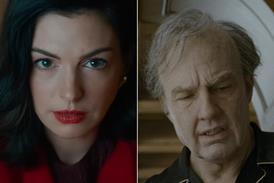
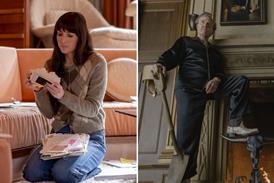
This year, Elsinore, in which Andrew Scott stars as real-life actor Ian Charleson taking on his final stage role while being treated for Aids in 1989, and The Debut, featuring Julianne Moore as a homemaker cast in the leading role of an am-dram production, provide curatorial bookends, and speak to each other. “They’re both set in the theatrical world; they’re both films that have a deep sense of creativity and community and resistance and reinvention at their core,” observes Matheson. “How what we do together is much greater than what we can do on our own.”
Awards trail
Nobody would contest that LFF’s position in the calendar, coinciding with the launch of the film awards season, has benefited the festival – as has the strong role the Bafta Film Awards play as a signpost to Oscar. But does the symbiotic relationship also have a downside? Since virtually every LFF gala film is being shown separately to London awards voters at talent Q&A screenings, industry members could enjoy their own parallel film festival without ever setting foot on LFF’s geographical centre at London’s South Bank.
This is not a concern for Matheson, who emphasises: “We are first and foremost a public-facing festival. Obviously, we welcome industry, and that’s an important audience that’s with us for the festival.”
She is also clear-eyed about the benefit that the synchronicity with awards campaigning brings. “If we didn’t have all that other activity happening around us, we’d be quite a different festival. It’s kid in a candy shop territory, this whole intense period where everyone has got so many things on. It’s pure abundance.”
Last year, LFF titles that went on to figure significantly at Bafta and Oscar included Hamnet, Sentimental Value, Bugonia, Frankenstein, Pillion, It Was Just An Accident and Blue Moon. There were also plenty of LFF gala titles that were positioned for voter attention but then largely shunned by voters, including Jay Kelly, After The Hunt, Ballad Of A Small Player, Rental Family, The History Of Sound and Die My Love.
Matheson enjoys watching the season unfold but feels at one remove. “When you see, ‘Oh, this is going to launch at Venice,’ suddenly you’re like, ‘These are starting to look like ponies, they’re lining up,’” she says. “But they’re quite different animals for us because we’re thinking, ‘Is this a film that’s going to work, especially for the Royal Festival Hall? Is this a film that’s going to appeal to the UK public?’ I am always perplexed, though. There’s always a film every year where I’m like, ‘Really? That didn’t get any nominations?’”
LFF’s Industry Forum runs October 8-15, and includes Spotlight conversations with leading UK producers Pippa Harris and Jim Wilson. The forum immediately follows Film London’s LFF‑aligned Project Finance Market, which runs October 6-7.
With Edinburgh International Film Festival, Picturehouse Create, Glasgow Film Festival, Sheffield DocFest and Screen International’s own Summit catering to industry delegates, is it becoming harder for the LFF industry strand to define its own identity?
“We are looking at exploring creative careers,” says Matheson. “We’re not a formal market so we think about how do we make meaningful space for people to network, for people to be introduced to new works. Our keynotes are about us bringing the essential decision-makers to industry audiences.”
Budget crunching
This year’s LFF is the first since 2010 that is not presented in partnership with American Express, which suggests a significant loss of income. Cunard, a sponsor since the 2023 edition, has also departed this year. More encouragingly, Mastercard has joined as Screen Talks partner. The UK government is now the sole main funder, with a contribution of £6.9m ($9.1m) spread across the 2026, 2027 and 2028 editions, up from £1.9m ($2.5m) solely for 2025 – support announced as part of a three-year £75m ($99m) Screen Growth Package.
“It is a huge vote in confidence about the significance of the LFF and what that delivers back to the UK, not just in cultural terms but in real economic terms,” says Matheson. “The festival does deliver a lot back economically in terms of the money that comes into the UK over the days of the festival.”
As regards the sponsorship, “It’s important that we are not dependent on a single title partner. It allows us to be more nimble with opportunity, but it also means the festival has a stable operating base, so that we know we can deliver each year.”
Matheson says that despite the sponsorship changes, the festival is working with a similar budget to 2025. “Having said that, everything costs more so we are always looking at, ‘Okay, what is essential? If we do this, what can’t we do?’ We have to think about it in those terms.
“Our director of business and production, Olivia Howe, is an incredible manager of the festival, and she thinks deeply about how we can cut our cloth sensibly and well,” she adds. “This year we have kept all the public-facing programme – we haven’t taken anything away.”
Matheson’s predecessor as LFF festival director, Tricia Tuttle, became director of the Berlinale in 2024, and her second edition this year was famously rocked by political controversy – to the extent that Tuttle’s tenure at one point looked threatened. It is fair to say Matheson has no plans to introduce, for example, a jury press conference for the LFF official competition.
“We don’t do press conferences as part of our festival,” she explains, evenly. “They’re not part of our set-up.”
Matheson relates her own experience of the Berlinale as different from how it was covered by some of the trade outlets. “I was in packed cinemas with the general public,” she says. “I was seeing great films, and then you come home and you read the account of Berlin. I do think sometimes there’s missed opportunities with how people use press conferences. We have a film in the festival called Josephine [directed by Beth de Araujo], which premiered in Sundance and then went on to Berlin. It’s a complex film about trauma, about parenting. There are so many things to talk about, and I wanted to hear the [film team] talk about the film they’d made, and [in Berlin] there were just no questions about that.”
Tuttle served five years as LFF festival director (2018-22), following Clare Stewart who spent six years in the hot seat (2012-17), and Sandra Hebron with eight editions (2004‑11). This year is Matheson’s fourth edition, and she is not yet showing any indication of itchy feet. Applying for UK residency does suggest a declaration of intent, and last year’s edition may be deemed a success, achieving its highest ever audience of 236,000 (including LFF For Free events and LFF Industry Forum). Seat occupancy at paid-for physical screenings rose from 92% in 2024 to 94% last year.
“It’s hard coming into a market you don’t know as well,” explains the Brisbane-born festival director. “We’re an audience-facing festival, so for those first couple of years, the thing that felt most daunting was not feeling like I really knew the audience. Every year, I’m learning more about them, and that is giving a greater sense of programming freedom.
“We do a lot of handwringing about the landscape, and it’s becoming much more expensive to put on any kind of event. But I’m already excited to see what 2027 brings.”
BFI London Film Festival 2026 Gala titles
| Film | Festival premiere | UK distributor | UK release date |
|---|---|---|---|
| Artificial (dir. Luca Guadagnino) | New York | Neon | Jan 22, 2027 |
| Behemoth! (dir. Tony Gilroy) | New York | Searchlight Pictures/Disney | Dec 04 |
| Being Heumann (dir. Sian Heder) | Toronto | Apple | Nov 06 |
| The Beloved (dir. Rodrigo Sorogoyen) | Cannes | Curzon | TBC |
| Bunker (dir. Florian Zeller) | Venice | Studiocanal | Feb 19, 2027 |
| Club Kid (dir. Jordan Firstman) | Cannes | A24 | TBC |
| The Debut (dir. Jesse Eisenberg) | Telluride | Lionsgate | Jan 15, 2027 |
| Elsinore (dir. Simon Stone) | Telluride | Studiocanal | Jan 29, 2027 |
| Fatherland (dir. Pawel Pawlikowski) | Cannes | Mubi | Oct 23 |
| Fjord (dir. Cristian Mungiu) | Cannes | Picturehouse Entertainment | Nov 13 |
| I Love Boosters (dir. Boots Riley) | SXSW | Universal | Oct 30 |
| Ink (dir. Danny Boyle) | Venice | Studiocanal | Jan 8, 2027 |
| Klara And The Sun (dir Taika Waititi) | BFI London | Sony | Oct 23 |
| La Bola Negra (dirs Javier Ambrossi, Javier Calvo) | Cannes | Altitude | Nov 06 |
| A Long Winter (dir Andrew Haigh) | Telluride | Mubi | Jan 15, 2027 |
| Minotaur (dir Andrey Zvyagintsev) | Cannes | Mubi | Nov 27 |
| Paper Tiger (dir James Gray) | Cannes | Neon | Feb 5, 2027 |
| Possible Love (dir Lee Chang-dong) | Venice | Netflix | Oct 23 |
| Prima Facie (dir Susanna White) | Toronto | Sony | Nov 13 |
| Ray Gunn (dir Brad Bird) | BFI London | Netflix | Dec-04 |
| Tender Loving Care (dir Mike Leigh) | Telluride | Studiocanal | Feb 12, 2027 |
| Wild Horse Nine (dir Martin McDonagh) | Venice | Searchlight Pictures/Disney | Nov 06 |
| Wildwood (dir Travis Knight) | BFI London | Black Bear | Oct 23 |
| Your Mother Your Mother Your Mother (dir Bassam Tariq) | Toronto | Amazon MGM | Nov 20 |



No comments yet