












Selected as Morocco’s official Oscar submission, the film plays Cairo as part of an extensive festival run
Dir: Laila Marrakchi. Morocco/France/Spain/Belgium/Qatar. 2026. 106mins
Loosely based on true events, Strawberries steadily builds into a cry of anguish about the treatment of migrant workers. Director Laila Marrakchi’s first feature in over a decade follows the stories of women who travel from Morocco to Spain to pick strawberries, drawn by the false promise of good pay and decent conditions. While it may lack sublety in places, it is a well-acted tale of injustice that retains a strong emotional grip.
Lets the politics speak through the human stories
Solidly constructed, if somewhat predictable, Strawberries successfully details the growing tensions between self-interest and solidarity. Selected as Morocco’s official Oscar submission and now playing Cairo after a Cannes world premiere and extensive festival play, the film has sold to multiple territories including the US, France, Germany, Greece and Italy
After making features including Marock (2005) and Rock The Casbah (2013), Marrakchi has spent the past decade directing episodes of French television series The Bureau, The Eddy and Careme. That experience shows in her focused, unfussy approach to the material here. She maintains an even pace throughout before rushing towards a courtroom confrontation in which everything is done to besmirch and belittle the victims and favour the accused.
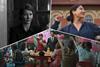
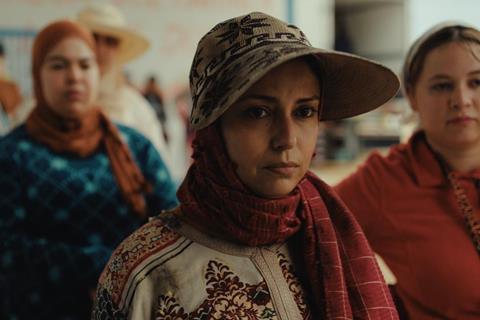
Hasna (Nisrin Erradi) and Meriem (Hajar Graigaa) are two of the Moroccan women who have signed on to pick strawberries in the Huelva region of Spain. Economical opening scenes depict official interviews in which they are asked for papers and passports, questioned about criminal records and their marital status and whether their husband has given them permission to travel. Marrakchi quickly establishes that the women have no real control over their lives.
What follows is an almost documentary-like depiction of their daily lives. We see the huts they will share, the acres of ripening fruit that await them and the endless rows of sweltering polytunnels where they will labour. Cinematographer Tristan Galand, who served his apprenticeship with the Dardenne brothers and lensed Souleymane’s Story (2024), focuses on the heat, light and dust of a Spain starting to experience drought. His shots of rotting fruit reflect the worsening position of the women.
Marrakchi captures a sense of the fragile solidarity among the woman and provides revelations about their motivations, from providing for their families to dreams of building their own home. Hansa is established as a distinctive character with more curiosity and less inclination to subservience than many of the other women; her full backstory is only revealed late in the story. She has been promised 35 Euros a day but soon realises that has been a lie. Defiance is punished. There is a hierarchy of those in charge, even among the women, and a chain of complicity that extends from authority figures prepared to turn a blind eye to consumers oblivious as to the true cost of their summer strawberries.
There are echoes of Ken Loach/Paul Laverty collaborations in the subject matter and a shared flavour with Laura Carreira’s On Falling (2024), which depicted the plight of zero hours workers. Marrakchi similarly lets the politics speak through the human stories. Hasna, played with fierce determination by Erradi, is a nuanced character who is not always likeable as she finds herself torn between the rewards of not rocking the boat and her instinct to oppose injustice. Her dilemma grows more acute when boss Ivan (Paco Mora) selects Meriem as his next conquest.
There are notable supporting performances from Hind Braik as the eternally upbeat, pragmatic Zineb and Fatima Attif is the weary, worn down Khadija, a veteran picker at the Fresa del Carmen farm. Itsaso Arana’s idealistic human rights lawyer Pilar is a more one-dimensional figure as she rides to the rescue, championing the cause of the women.
Production companies: Lumen, Atelier, Mont Fleuri Productions, Fasten Films, Mirage
International sales: Lucky Number hello@luckynumber.fr
Producers: Juliette Schrameck, Mathieu Verhaeghe, Thomas Verhaeghe
Screenplay: Laila Marrakchi, Delphine Agut
Cinematography: Tristan Galand
Production design: Frederic Cambon
Editing: Nicolas Chaudeurge, Jean-Francois Elie, Thomas Heurtier
Music: Clara de Asis
Main cast: Nisrin Erradi, Hajar Graigaa, Hind Braik, Fatima Attif, Itsaso Arana