










There are a record 22 films, including two festival winners, from the combined countries of Africa and the Middle East competing at Oscar. Screen tours the two regions.
Africa
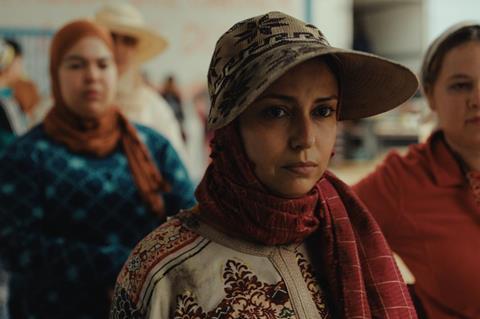
Africa has almost doubled its Oscar international feature entries this season: 11 countries submitting is up from just six that made last year’s final list and one down on the 2021 record of 12. This year’s cohort includes first-time entrant Rwanda, and two of the three African nations to have previously won this award: Algeria and South Africa (Ivory Coast is the one missing). The continent received one nomination last year, for Tunisia’s The Voice Of Hind Rajab, but progress remains slow: Africa has never had two countries nominated in the same year, whereas Europe has had that in all 70 years of this award being competitive.
Marie-Clementine Dusabejambo’s Ben’Imana is the choice of virgin entrant Rwanda. The Un Certain Regard premiere won Dusabejambo the Camera d’Or for best first feature at Cannes before a healthy festival run including Sydney, Karlovy Vary, Toronto and London. Set in 2012, a new generation of Rwandans attempt to move on from the 1994 genocide, only to find trauma lies deep.
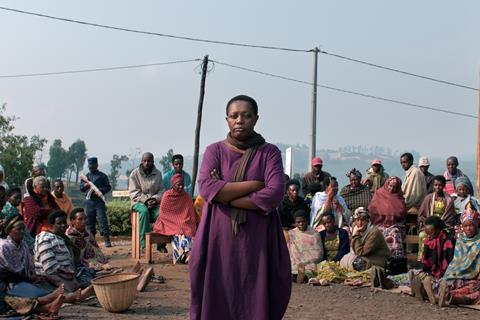
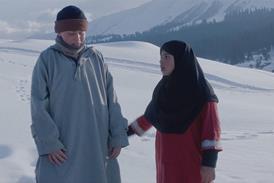
Ben’Imana also won the Cannes Fipresci prize, while another African entrant, Chad’s Soumsoum, The Night Of The Stars, took the equivalent award at Berlin. Mahamat-Saleh Haroun has directed all three of Chad’s previous entries: 2003’s Abouna, 2014’s GriGris and 2022’s Lingui, The Sacred Bonds. His latest is a magical-realist fable about a teenager in a patriarchal Chadian village who has prophetic visions and meets an older woman who has similar experiences.
Algerian entry Roqia explores the country’s Black Decade civil war through the stories of a man experiencing amnesia after a car crash and an ageing Muslim priest struggling with Alzheimer’s disease. Yanis Koussim’s psychological thriller launched at Venice Critics’ Week in 2025 before touching down at several genre festivals. Costa-Gavras’ Z remains one of only three films to have won this award for Africa, as Algeria’s first submission for the 1970 awards.
Having missed last year’s Oscars, Nigeria returns with Damilola Orimogunje’s Venice Giornate degli Autori premiere Dear Ajayi, telling the story of two estranged sisters forced to live together while caring for their paralysed mother.
Venice was also the starting point for Vincho Nchogu’s Kenyan land ownership drama One Woman One Bra, which launched in the Biennale College in 2025 before winning the Sutherland Award for best first feature at BFI London. Nchogu is the first woman to solo direct a Kenyan Oscar entry.
Variations On A Theme, Jason Jacobs and Devon Delmar’s Rotterdam Tiger-winning South African entry, follows an elderly goat herder who falls victim to a scam promising reparations for her father’s Second World War service. Gavin Hood’s Tsotsi won the foreign-language Oscar in 2006, but the country has not had a nomination since.
Vibrant history
Amir El-Masry, a Screen International Star of Tomorrow in 2021, leads Abu Bakr Shawky’s The Stories as a young man from Cairo whose life changes after a pen-pal romance with an Austrian woman in the aftermath of the 1967 war with Israel. This is Shawky’s second time representing Egypt at the Oscars after Yomeddine for 2019; despite a vibrant cinema history, the country has never been nominated from 39 previous entries (the first three as United Arab Republic).
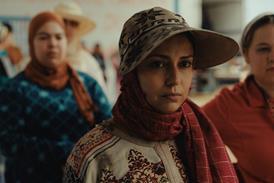
Morocco is also perennially overlooked, with no Oscar nominations from 21 previous tries, although Roschdy Zem’s Omar Killed Me, Maryam Touzani’s The Blue Caftan and Asmae El Moudir’s The Mother Of All Lies made the shortlists in 2012, 2023 and 2024 respectively. Trying for 2027 is Laïla Marrakchi’s Cannes Un Certain Regard entry Strawberries, about the bond formed between a mistreated group of Moroccan women picking fruit in Spain.
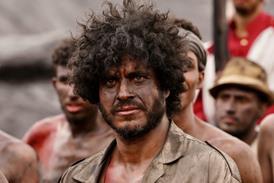
The Democratic Republic of the Congo returns to the Oscars with its second-ever entry, 29 years after Macadam Tribu was submitted for the 1998 awards. Yohane Dean Lengol and Hamed Mobasser’s Rumba Royale is a thriller set in 1959’s final year of colonial rule, as a photographer (Fally Ipupa) navigates tensions around politics, art and identity.
Kang Quintus starred in Cameroon’s 2021 entry The Fisherman’s Diary; he now represents his country as director of Mabanda, about a pregnant teenager lured into a dangerous slum following her mother’s death.
Senegal’s The Attachment is the sole documentary representing Africa this year. Mamadou Khouma Gueye’s film, exploring the demolition of his childhood neighbourhood in Dakar, launched at Switzerland’s Visions du Réel in 2025.
Middle East
A record nine nations from the Middle East have submitted films to the 2027 international feature Oscar, a laudable commitment to cinema from a region beset by multiple conflicts.
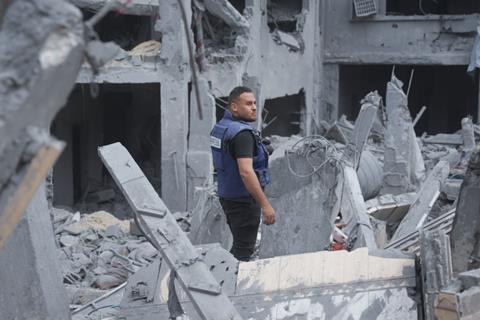
Military turmoil is the subject of several regional submissions, including Ahmed Hassouna’s Venice Open-launched Palestinian documentary Citizen Osama, following a photographer documenting the war in northern Gaza while protecting his wife and baby. Hassouna was one of 22 credited directors on Palestine’s entry for 2025, From Ground Zero.
The Israel-Hamas war is centred in Iran’s Land Of Angels by Babak Lotfi Khajeh-Pasha, about a Gazan woman trying to protect a group of children whose lives have been shattered by the conflict. Iran remains the most recent Middle Eastern territory to have won the award, with Asghar Farhadi’s The Salesman in 2017, and Farhadi also won with A Separation in 2012.
The 2014 Isis invasion of Iraq and Syria is the backdrop for Norwegian Kurdish filmmaker Halkawt Mustafa’s Iraqi entry No Paradise If You Are Killed By A Woman. The thriller, which launched in Venice’s Open strand, follows a Kurdish sniper who learns her sister may be alive in the wrecked city of Mosul. Mustafa is well versed in capturing conflict, after documentaries Hiding Saddam Hussein and The Women Isis Fears.
Lebanon’s financial crisis sends two women on a nighttime heist to reclaim their money in the territory’s entry Furies by Rami Kodeih, another Venice starter from the Spotlight strand. Producers include Brazil’s Rodrigo Teixeira, who has backed numerous international feature submissions including 2025 winner I’m Still Here, while George Clooney and Grant Heslov are among the executive producers.
Tell Me Everything received a record 16 nominations at Israel’s Ophir awards in September, winning 10 categories including best director for Moshe Rosenthal, and best picture, which comes with selection as the country’s Oscar entry. The film follows a young boy in 1987 who discovers that the father he idolises is having secret relationships with men amid the Aids crisis.
Saudi Arabia’s Red Sea International Film Festival may not be taking place in 2026, but the country retains its profile as backer of several awards contenders through its Red Sea Foundation. Among these are Anas Ba-Tahaf’s Saudi entry A Matter Of Life And Death, a romantic comedy about a pact between a reckless young woman and a heart surgeon, which premiered at Red Sea in 2025.
Jordanian entry Sink, Zain Duraie’s debut feature, has production funding from across the region including the Red Sea Fund, Qatar’s Doha Film Institute and the Jordan Film Fund. The psychological drama sees a mother navigate the tribulations of her eldest son’s deteriorating mental health. Jordan made the shortlist of 15 last year with Cherien Dabis’ All That’s Left Of You and was nominated in 2016 for Theeb.
Saudi backing
Syria makes its second-ever entry to the award and first since 2018 with Tawfik Sabouni’s documentary The Other Side Of The Sun, which sees five survivors re-enact the torture they experienced in Bashar al-Assad’s Saydnaya prison.
Turkey is still awaiting its first nomination in this category despite 32 previous entries, including six by Nuri Bilge Ceylan. Stepping up for 2027 is Tunc Davut with Like A Limbless Tree, about a terminally ill retiree who finds himself looking after his caregiver’s young sons, as his own adult children return home for the Eid holiday.
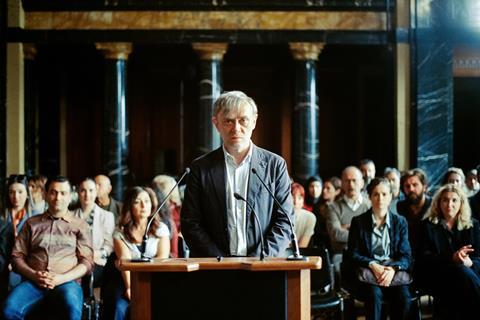
Ilker Catak’s Yellow Letters qualifies through winning the Golden Bear at this year’s Berlinale. The family drama follows a Turkish couple working in theatre who must restart their lives with their teenage daughter in Istanbul after suffering political persecution. Catak’s previous feature The Teachers’ Lounge was nominated in 2024, representing Germany.
Oscar eligibility is also bestowed on Majid Majidi’s Midday Meal, winner of best film at South Korea’s Busan International Film Festival — the only Asian festival to offer the qualification reward. Majidi is an Iranian Oscar stalwart with six submissions, scoring a nomination with Children Of Heaven in 1999 and reaching the shortlist with Sun Children in 2021. Midday Meal is about a teacher who becomes an oil smuggler in order to save his village school.




No comments yet