












Not selected to compete for the international feature Oscar? That’s no problem in Bafta’s equivalent category, as long as you achieve a UK release and pay to submit. Screen surveys this year’s contenders for film not in the English language.
Forty-six titles are in the running for the film not in the English language (FNIEL) Bafta. Many are the familiar arthouse behemoths that premiered in Cannes and Venice, and 19 have been chosen to represent their countries for the international feature Oscar, including the likes of La Bola Negra, Possible Love, All Of A Sudden, Minotaur and Fatherland. That leaves 16 scripted dramas and 11 documentaries that have been overlooked by national Oscar committees, and are now eyeing awards glory at the Baftas.
“It is an incredibly competitive category,” says Jake Garriock, senior director of distribution at Curzon. “Bafta members have become more and more open-minded in what they will watch, which I think is reflective of society in general.”
Last year, Bafta voters nominated five films in the FNIEL category that all happened to be titles submitted by countries for the international feature Oscar. Not only that, for the first time ever, the five films nominated by Bafta exactly matched the Ampas quintet: winner Sentimental Value, It Was Just An Accident, The Secret Agent, Sirât and The Voice Of Hind Rajab.
Over the years, many films nominated for FNIEL by Bafta were not country submissions to Oscar, including recently All We Imagine As Light, Past Lives, Anatomy Of A Fall, Petite Maman and Minari.
Bafta has taken pains to help smaller distributors compete in the category. Films do not need to be released in the UK until a month after the February 21 ceremony, thus hopefully avoiding being crushed at the box office by heavyweight awards titles at the start of the year. There is also a lower threshold for the number of commercial screenings required to be eligible, and the submission fee is a manageable £1,000 ($1,300).
Welsh-language crowdpleaser Effi O Blaenau has grossed a healthy £240,000 ($316,000) via Metfilm in UK and Ireland cinemas since its June release, and earned six British Independent Film Award (Bifa) nominations, but was not selected as the UK’s Oscar pick.
“Films like Effi don’t come along that often,” says Metfilm’s head of sales and distribution Zak Brilliant. “It’s a rare beast to have a foreign-language title that’s indigenous to the UK, and it’s an incredibly strong film. I appreciate there is a lot of attention in this category going towards the Cannes frontrunners, but I like to think of Effi as a dark horse. It’s just about whether voters can look a bit closer to home.”
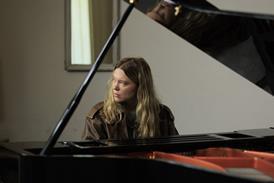
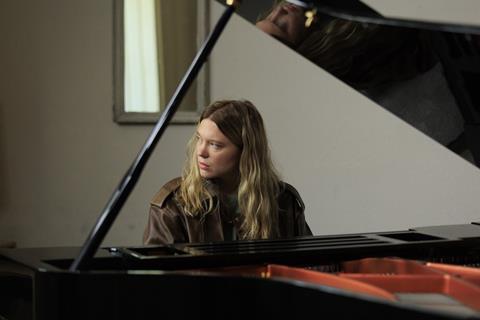
Austrian director Marie Kreutzer is in the running with Gentle Monster, starring Léa Seydoux as a concert pianist whose husband is arrested for possessing child pornography. The filmmaker’s Corsage was Bafta-nominated in 2023, and made the Oscar shortlist of 15. Cannes premiere Gentle Monster lost out to Markus Schleinzer’s Rose as Austria’s Oscar submission, but is still being given a strong awards push by Netflix, which has territory rights including the US and UK.
Another Cannes title with awards heat — including Bifa and Gotham nominations — is Marine Atlan’s debut feature La Gradiva, about French teenagers on a school trip to Pompeii and Naples. Metis Films releases in the UK on January 1.
“It’s fantastic to see the film resonate with audiences and voters around the world,” says Metis director Ben Metcalf. “The timing seems perfect for a film that’s both universal in its coming-of-age themes and specific in its discussion of issues facing young people in France and beyond.”
Likewise from France, but on a much bigger scale, is historical biopic De Gaulle: Résistance, released in the UK by Entertainment Film Distributors. The second part of the biopic, Liberté, has not been submitted to Bafta, presumably to prevent the two films from cannibalising each other. They have grossed £1.3m ($1.7m) combined in UK and Ireland cinemas.
Spain’s gain

Titles by Pedro Almodovar have been submitted to represent Spain at the Oscars on seven occasions, with All About My Mother winning in 2000, but his most recent Spanish-language effort Parallel Mothers was passed over by the country’s selection committee before achieving a FNIEL Bafta nomination in 2022. Curzon will hope Almodovar’s latest Bitter Christmas — which lost out to La Bola Negra as Spain’s international Oscar pick — can likewise earn reprieve from Bafta voters.
Another buzzy Spanish film from Curzon — Rodrigo Sorogoyen’s Cannes Competition entry The Beloved starring Javier Bardem — is also in contention for acting awards, and having the film in FNIEL could complement the campaign to get his performance recognised.
Genre titles are seldom feted by Bafta FNIEL voters but Japanese monster movie Godzilla Minus Zero, reviewed favourably when released in November by Anime Ltd, could stomp its way onto the ballot. UK and Ireland box office totalling £2.5m ($3.3m) at press time indicates the film is being seen. Also from Japan is Lee Sang-il’s Kokuho, which was the country’s entry to the international feature Oscar a year ago and competes belatedly at Bafta.
Earning even bigger box office than Godzilla Minus Zero is Nitesh Tiwari’s Ramayana, with £4.2m ($5.5m) in the UK and Ireland at press time. The first instalment of a two-part tale based on the titular Hindi epic poem is one of four Indian films competing at Bafta this year, joining Pyre, LGBTQ+ drama Cactus Pears and the country’s official Oscar entry Gondhal. From Nepal is rural drama Gauthali.
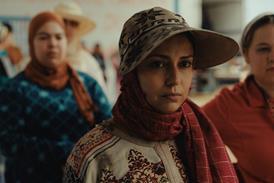
Crime drama Báite from Ireland, launched at Galway Film Fleadh in 2025, grossed €62,000 ($68,000) in its home market from a March release by Eclipse. Arabic-language Cotton Queen from Sudan debuted at Venice Critics’ Week in 2025, grossing £16,000 ($21,000) in the UK and Ireland for TAPE Collective.
Documentaries rarely secure FNIEL nominations — just For Sama and 20 Days In Mariupol in the past decade — but NAZA could join the list. Its exposure of Israel Defense Forces killings of civilians in Gaza has connected with audiences globally. Producer James Wilson is a veteran of two recent awards campaigns: The Voice Of Hind Rajab secured nominations at both Bafta and Oscar, while The Zone Of Interest won at both awards.
Several other documentaries submitted in this category might resonate with UK voters. Disney’s The Match, directed by Argentinians Juan Cabral and Santiago Franco, is a vivid account of the 1986 FIFA World Cup quarter-final game between Argentina and England, famous for Diego Maradona’s ‘Hand of God’ goal.
Sundance hit One In A Million, which follows a Syrian refugee girl over a 10-year period, was made by London-based filmmakers Itab Azzam and Jack MacInnes, while Scotland-based Inma de Reyes, director of bullfighting doc The Boy And The Suit Of Lights, was supported by Screen Scotland.
Dogwoof’s Birds Of War, likewise competing in FNIEL as well as documentary, was produced by Edinburgh-based Sonja Henrici Creates. It tells a story combining politics and romance as a London-based Lebanese journalist falls in love with a Syrian activist.
Henrici explains why it made sense to enter the race: “It’s harder for documentaries to get pushed through foreign-language categories but it’s another way to raise profile for the film and get the most amount of people to watch it. It’s a British film but it’s 90% in Arabic. Why not submit?”
The other docs eyeing the FNIEL category this year (that are not competing for the international feature Oscar) are An Eye For An Eye, Ash And Crayons, A Child Of My Own, Cielo, A Fox Under A Pink Moon and From Dust We Spin.
Animations Flow in 2025 and The Boy And The Heron in 2024 each made the FNIEL longlist of 10, though fared better in the animated feature category (The Boy And The Heron as winner). This year, French animation Iron Boy is bolstering its Bafta presence with a FNIEL submission. It will be a rare feat if Louis Clichy’s film achieves a nod in the category — the last time an animation was nominated as a FNIEL was in 2009 with both Persepolis and Waltz With Bashir. Iron Boy’s nod for best European film at the European Film Awards could help raise its profile in a crowded category that remains, as ever, wildly competitive.






No comments yet