







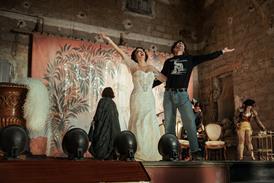


In Digger, a bravura address to the European Parliament by Tom Cruise’s oil tycoon is the film’s most memorable setpiece – filmed in one long, uninterrupted take. Screen talks to the key creative heads behind the epic sequence. Spoilers follow.
On its surface, Alejandro G Iñárritu’s satirical black comedy Digger is about a brash Texan oil tycoon, played by Tom Cruise, whose reckless drilling in the Arctic causes an ice mass to break free, triggering a series of devastating tsunamis in northern Europe. But dig deeper and Digger is more than it seems, as much about the nature of art as the dangers of climate change, revealing its secrets slowly across the running time.
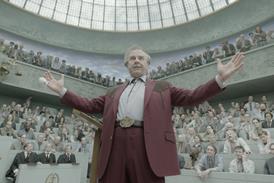
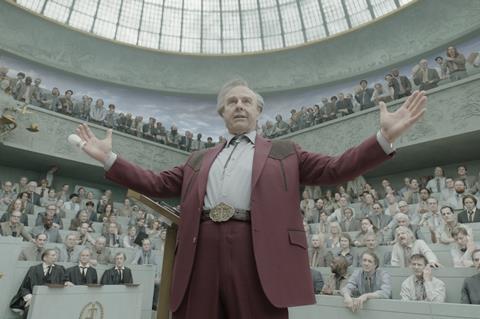
About an hour into the film, Cruise’s Digger Rockwell heads across the Atlantic to speak at the European Parliament. But rather than apologise for the environmental catastrophe he has created, Digger unleashes a blistering rebuke, skewering its delegates’ hypocrisy for condemning his company while relying on its fossil fuels. It is a wild, bullish, grandstanding performance from Cruise, filmed in a continuous 10-minute take.
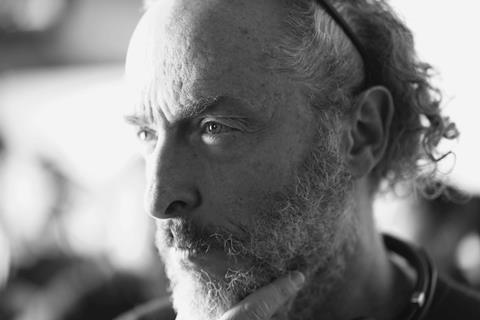
Iñárritu began thinking about Digger during production on 2015’s The Revenant, and initially developed the project with Netflix before landing at Warner Bros. During that time, he and Emmanuel ‘Chivo’ Lubezki, who shot The Revenant and Birdman for the director, winning two of his three consecutive cinematography Oscars, spent months scouting locations and discussing the film’s look.
While both The Revenant and Birdman had been shot digitally, using long, seemingly uninterrupted takes, Digger required a radically different visual approach, not least shooting on film.
“All our references were painterly,” says the cinematographer. “It was basically [Jan] van Eyck and [Hans] Memling and other early Renaissance painters. We were also talking about dioramas, and the uncanny lighting of the dioramas, and I thought, maybe everything we see outside the windows should be dioramas.”
“Alejandro and Chivo really like Willem Hammershoi, the Danish painter,” says Richard Johnson (Tropic Thunder, The Hateful Eight), who shared production design duties on Digger with Dennis Gassner (Skyfall, 1917). “Super atmospheric. They also like Vermeer and Bruegel, even to some degree Rembrandt, although Rembrandt’s a bit more literal.”
Before Gassner and Johnson began work, Iñárritu and Lubezki had already mapped out the film with stand-ins, proxy sets and a digital camera. “Not unlike what we did in Birdman,” says Lubezki. “We build the sets with canvas and rehearse and rehearse. We marked the floor. We brought musicians to create the music. Alejandro timed the music into the monologue of Tom.”
What the trailers kept hidden was that all the scenes involving Digger are part of an elaborate theatre production, with Cruise playing an actor playing the eponymous industrialist and rehearsing a stageplay in some unspecified post-apocalyptic future. The highly wrought performances and design, even Digger’s fake cat, are part of this artifice, with Gassner and Johnson’s ornate sets adhering to the theatricality.
“We are shooting three-wall sets, or sets where one of the walls is canvas, so it’s very truthful in that way,” says Lubezki.
The European Parliament set was no different, with its design informed by Soviet-era parliament buildings scouted by Iñárritu and Lubezki, including in Hungary, Romania and Bulgaria. “They responded very well to the Soviet vibe of those places, so we were anxious to get that feel and the Soviet-style colouring into that set,” says Johnson. “The bas-relief that wraps around the overhanging balcony was inspired by one of those Eastern European parliaments.”
Studio build
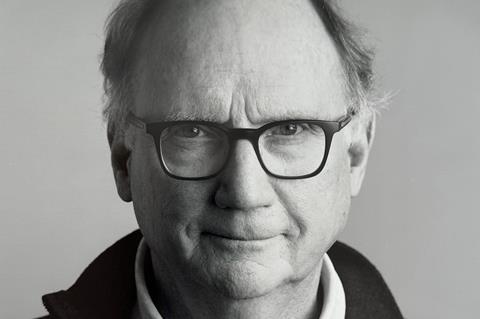
Constructed at Pinewood Studios, England and measuring 100-feet square and 24-feet high, the set was raised off the stage floor to accommodate mechanics for a revolving section in the middle. It also required a six-by-18-foot channel to be cut for a camera crane. “So it could get right up and [in a] low angle with Tom at that podium,” says Johnson.
“It was very Citizen Kane,” adds Gassner. “Almost every stage was elevated. A lot of it because of [Digger’s] cat and the mechanics of the puppeteering.”
In keeping with its Soviet-era inspirations, the set was painted in muted greens and mid-greys. “There’s almost no black, like in a Memling painting,” says Lubezki. “There are no primary colours. Digger’s suit is magenta, so he’s separated by his wardrobe and the light. We did a lot of tests for that scene.”
In the finished film, the parliament has a glass-and-metal-lattice domed ceiling. But while filming, there was no roof, just a bank of LED lights – the dome was added later by visual effects.
“The light, even though it’s soft, is very theatrical,” says Lubezki. “It’s moving with Tom and highlighting him from the rest of the scene. Technically it was very challenging. The movie was much trickier than it looks.”
The parliament held around 250 people, but there are around 65 dummies and cardboard cutouts dotted about to fill out the numbers. The dummies and cutouts were puppeteered by the background actors to give the illusion of movement. Lubezki used dummies on 2001 film Ali for the “rumble in the jungle” fight between Muhammad Ali and George Foreman, and again on Birdman.
“It’s part of the artifice, so you go with it,” says Gassner. “I mean, Ben-Hur had dummies and cutouts. It’s an economic thing in some way, but you get to control the emotional feeling because they’re not real.”

Lubezki filmed Digger in VistaVision, a format dating back to the 1950s and used on The Brutalist, Bugonia and One Battle After Another. But since VistaVision film reels can hold only between four and five minutes of footage, he and Iñárritu opted to shoot Cruise’s extended speech digitally, while covering the rest of the scene with film cameras and iPhones.
“It was going to be in different takes, in different angles, so there was going to be coverage,” says Lubezki. “We started shooting with a VistaVision camera but we then went to a digital camera because we realised we wanted to give Tom the chance to do the whole scene in one.”
Cruise nailed Digger’s monologue on take four.
“The crane, the camera, the lights, the extras, the music, all the cues, the floor moving, just happened to be perfect,” says Lubezki. “It was like watching [pianist] Glenn Gould performing the most difficult partita in front of you. The precision of Tom that comes from doing all these stunts translated into the precision of acting, delivering the speech, the emotion, the gestures of the hands. It was mind-blowing.”



No comments yet