


Hassen Ferhani’s layered cine-essay premieres in Visions du Reel’s Burning Lights competition
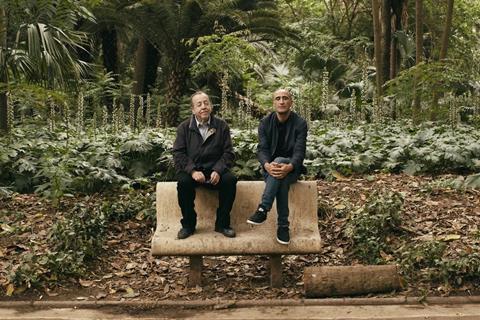
Dir: Hassen Ferhani. France/Algeria. 2026. 78mins
This personal cine-essay on belonging and creativity starts off feeling like a docu-portrait of a beloved city, Algiers, before taking a turn into more personal, experimental and scrappy territory relating to fathers and sons, love and loss.
Personal, experimental and scrappy
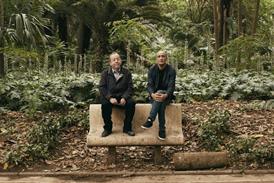
We might only see writer-director-cinematographer Hassen Ferhani on screen occasionally, but his presence behind the camera as an interrogating and steering voice is felt as keenly as his father, the charismatic journalist and writer Ameziane Ferhani – ostensibly the subject of the film (although his cigarette smoke threatens to upstage him). The city also holds its own as a co-star, and this is ultimately a tribute to both Algiers (and, yes, its gorgeous jacarandas trees) and to a man shaped by his beloved home city.
Alea Jacarandas has its world premiere at Visions de Réel’s Burning Lights competition, dedicated to boundary-blurring experiments and its within similar showcases that Ferhani’s third feature is most likely to find a comfortable berth. (His previous film, 2019’s 143 Sahara Street, a documentary portrait of an Algiers cafe owner, won the Best Emerging Director award at Locarno.) More daring audiences, particularly those curious about Algiers and its modern cultural heritage, should find Alea Jacarandas of interest, but its literary detail, local focus and tendency to meander are likely to be a challenge to wider appeal.
The sound of seagulls and the sight of white-washed walls introduce Algiers in a wide shot before a few tighter, jerky frames suggest we are on the hunt for something or someone. Then we find it: a jacaranda tree. And then another. The film honours Ameziane’s obsession with these trees by frequently stopping to bathe in their beauty: their violet explosions are visual sighs of relief among the monochrome city.
Ameziane – an immediately likeable presence – tells his son of his ongoing project to document the trees, which first arrived in his country from Latin America back in 1838. So far, he’s counted more than 200 in Algiers’s streets and courtyards. We learn, too, that the jacaranda plays a big role in his new novel. For him, it has a symbolic appeal, representing beauty, imagination and resistance.
Ferhani experiments with ways to capture his father’s new novel on screen. He gives Ameziane directions (“Great, now please exit the shot, dad”) after the older man has spoken about his love for jacarandas. He interjects as his father rehearses lines with a companion, the actor Samir El Hakim, or reads directly from his book while sitting at his desk. The way Ferhani shares these attempts to dramatise, showcase and discuss Ameziane’s new book have an esoteric behind-the-scenes appeal: the making of we’re-not-quite-sure-what.
But these literary experiments feel secondary and a bit academic compared to the film’s more tender face: the relationship we witness between father and son, both in their conversations as they wander the streets of Algiers and via interludes of warm home-movie footage. As a child, Ferhani films his mum, his sister and his dad in their home. His dad’s pride and encouragement is affecting, especially when he expresses his hope that Hassen will be able to realise his ‘audio-visual ambitions’ with this new kit.
In the present, Ameziane talks about the push and pull of home, and how, when he was a young man living briefly as a student in Toulouse in the late 1970s. he thought to himself, ‘You’ve come here to deal with problems you have back home’. You suspect these are ideas that his son is grappling with too as he wrangles with such personal filmmaking – especially when the film takes a direction that cannot have been foreseen at the point of its inception.
Alea Jacarandas (the title is a play on Julius Caesar’s pronouncement when crossing the Rubicon, ‘Alea iacta est’ – ‘The die is cast’) is at its most moving when we feel the thoughts and feelings of father and son merge together. Hopes and fears cross generations. In video footage shot by Hassen of himself as a young man we see him preparing to leave the family home for good, talking to himself in the mirror and sharing that he doesn’t really want to leave. The portrait of the father ends up being equally a portrait of the son.
Production companies: Les Films du Bilboquet, Tact Production
International sales: Andana Films, contact@andanafilms.com
Producers: Eugénie Michel-Villette, Oualid Baha, Hassen Ferhani, Karim Moussaoui
Screenplay: Hassen Ferhani, Ameziane Ferhani, Juliette Flamant
Cinematography: Hassen Ferhani
Editing: Léa Chatauret, Rodolphe Molla
Music: Hakim Hamadouche