











The works of Spanish poet Federico Garcia Lorca inform Javier Calvo and Javier Ambrossi’s Cannes Competition title
Dirs: Javier Calvo, Javier Ambrossi. Spain/France. 2026. 155mins
Hinging on the imagined rediscovery of a long-lost novel by gay Spanish playwright and poet Federico Garcia Lorca, La Bola Negra is a stirring, timely reclamation of Spain’s buried and repressed early 20th century queer culture. It’s impossible not to admire the passion which directing duo Javier Calvo and Javier Ambrossi bring to this triple-timeline story, based on a 2013 play by the film’s co-writer Alberto Conejero. But La Bola Negra is also a sprawling, undisciplined melodrama that aims for the multi-strand complexity of vintage Pedro Almodovar (who features as an associate producer), yet lacks that Madrid maestro’s sure, stylish feel for narrative elegance.
La Bola Negra’s maximalist edifice is built on the slightest of narrative premises
Known as ‘the two Javis’, director and co-screenwriters Javier Calvo and Javier Ambrossi are well known in their native Spain after a meteoric career that has led them from experimental musical theatre to TV, as creators of two of the country’s best-performing (and most widely exported) series of recent years: Veneno and La Mesias. This home-ground familiarity will undoubtedly give La Bola Negra a boost when it is released in Spain by Elastica in October. Elsewhere, its solid LGBTQ+ credentials may appeal to niche distributors, although it remains to be seen how much of an international audience exists for a non-Almodovar Spanish arthouse melodrama.
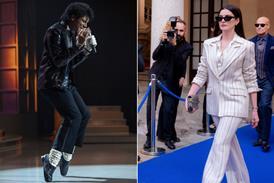
More effective as an earnest, cumulative emotional journey than as a viewing experience made up of rather random parts, La Bola Negra does eventually repay some of the battering we receive from Raul Refree’s swelling orchestral soundtrack. That soundtrack – which goes all in on the brass and the kettle drums – is just one of the old-school elements of an intensely cinematic film, whose artisanal credentials are most enjoyably on show in a standalone episode featuring Penelope Cruz as a famous Madrid cabaret singer who has been co-opted into entertaining Franco’s troops during the Civil War.
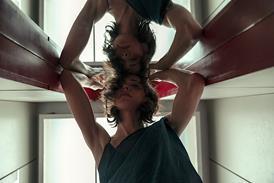
One of the pre-eminent figures of 20th century Spanish literature, Federico Garcia Lorca was killed by Nationalist forces in 1936 when he was just 38. Only four pages of his novel La Bola Negra (’The Black Ball’) have survived, but they are enough to suggest that this would have been the only work in which the writer directly confronted the theme of homosexuality – via the tale of a young man from a well-to-do Granada family who is rejected from membership of a high-class gambling casino because he is rumoured to be gay. Set in 1932, that story forms one of La Bola Negra’s three interwoven timelines.
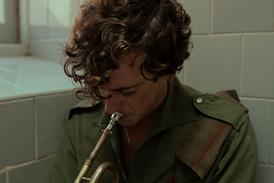
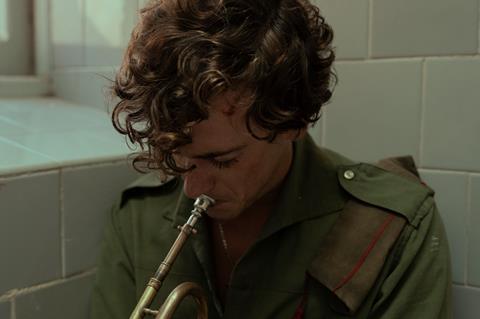
The second moves forward just five years to chart the story of a meeting between two soldiers on opposite sides of the Spanish Civil War. Sensitive, anxious Sebastian (Spanish singer-songwriter Guitarricadelafuente) has been reluctantly pressed into joining Franco’s Nationalists. Assigned as a guard in a military hospital, he bonds with one of the patients, Republican lieutenant Rafael (Miguel Bernardeau). Calvo and Ambrossi’s previous work has been infused with Catholic themes and images, and these preoccupations emerge here in a focus on Rafael’s sufferings, his lacerated skin, and on Sebastian’s gradual conversion into a disciple of this Christ-like figure. It’s also there in the film’s scathing portrait of the nuns who serve as hospital nurses, their charity short-circuited by loyalty to the Francoist regime and its ideology.
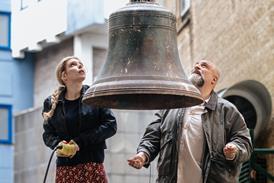
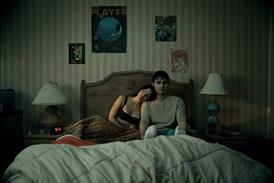
Rafael, it turns out early on, was Lorca’s lover and theatre troupe secretary. It takes us a little longer to work out how the protagonist of the films 2017 timeline, gay former playwright Alberto (Carlos Gonzalez), is connected to those earlier stories. He’s a historian, dedicated to uncovering forgotten or erased queer histories from the distant past. In true Almodovar style, a twist of fate will lead him to become the vector that allows Carlos, the hero of Lorca’s unfinished novel, to find narrative closure, and enables the buried stories of Sebastian and Rafael to finally emerge. It’s this near-contemporary strand that ushers in the film’s other brief ‘guest star’ appearance – by Glenn Close as a Hispanic studies academic clearly modelled on the great Irish Lorca expert Ian Gibson.
La Bola Negra is at its most engaging when getting lost in the byways of Spanish popular music, theatre and dance, as in the rousing Cruz episode, or developing minor characters such as Alberto’s abrasive mother Teresa, played with gusto by Almodovar regular Lola Duenas. It’s also good on set pieces. The selection committee of the casino where Lorca’s character Carlo is literally ‘blackballed’ is depicted with a satirical acidity worthy of Fellini. A sequence that sees naked soldiers cavorting on a northern Spanish beach surrounded by jagged grey rocks drips with queer allure and desire.
Ultimately, however, La Bola Negra’s maximalist edifice is built on the slightest of narrative premises. It feels a little like a film that has been constructed to convey a good, admirable message: the artifice of the exercise is never entirely distilled.
Production companies: Suma Content Films
International sales: Goodfellas sales@goodfellas.film
Producers: Javier Calvo, Javier Ambrossi & Jorge Pezzi
Screenplay: Javier Calvo, Javier Ambrossi, Alberto Conejero
Cinematography: Gris Jordana
Production design: Roger Belles
Editing: Alberto Gutierrez
Music: Raul Refree
Main cast: Guitarricadelafuente, Miguel Bernardeau, Carlos Gonzalez, Milo Quifes, Lola Duenas, Penelope Cruz, Glenn Close