









Maria Martinez Bayona’s Cannes Premiere title also stars Gael Garcia Bernal, Noomi Rapace and Beanie Feldstein.

Dir: Maria Martinez Bayona. UK/Spain/Norway. 2026. 102mins
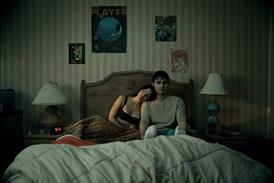
Two hundred years into the future, and humankind has conquered death. A cocktail of blood cleanses, bone replacement surgeries and pharmaceuticals bring immortality and endless youth – for those who can afford it, of course. But what happens when one grows tired of infinite life? Maria Martinez Bayona’s meticulously calibrated, dramatically knotty debut raises intriguing questions about ageing, entitlement, creativity and connection, all wrapped up in a stylish, intellectual drama driven by a layered central performance from Rebecca Hall.
Stylish, intellectual drama
Making its debut in Cannes Premiere, The End Of It is the English-language feature debut of Spanish-born, UK-based filmmaker Martinez Bayona, following shorts including Such Small Hands (2020) and Mia (2016). Like those works, it leans into genre, although its subtle, well-utilised science fiction elements stay in the background, throwing the complex human drama into sharp relief. The presence of Hall and co-stars Gael Garcia Bernal, Noomi Rapace and Beanie Feldstein is likely to help draw attention to an impressively measured and visually striking film.
Chic artist Clare (Hall) lives what appears to be an astonishingly charmed life, in a gorgeous modern home on the Mediterranean coast with her doting husband Diego (Garcia Bernal). There are, however, small hints that this is not the idyll it seems; the robot hoover that keeps smashing into the wall, Claire’s complete lack of enthusiasm for her upcoming birthday party. And it’s at this lavish celebration – her 250th, it turns out — that she finally speaks a truth we sense she has kept bottled up for years, if not decades. That she is utterly tired of endless life, bored with perfection and wants to grab her mortality with both hands.
The assembled throng is shocked, as is Diego – why should anyone want out of this privileged lifestyle? Production design from Lili Lea Abraham is certainly aspirational, if deliberately clinical, presenting a future vision that feels familiar and evolved rather than high concept. Clarie’s replicant home helper, Sarah (Feldstein), for example, is remarkably realistic; save her discreet charging cable and encyclopedic knowledge, you wouldn’t know she was made of silicon and robotics.
That restraint imbues the entire look of the film. Andres Arochi Tinajero’s cool cinematography keeps things at a detached distance, while a refined string-heavy soundtrack from Paloma Penarrubia never threatens to overplay the emotion. Similarly, the medical procedures used to stave off old age and death are understated and underplayed; a quiet blood cleanse at the breakfast table, a quick, painless replacement bone surgery fitted in before lunch. It’s presented as simply being the next step in cosmetic augmentation, an everyday occurrence for the super-rich.
But while humans may have unlocked the secret to never-ending life, the core elements of that life remain fundamentally unchanged. It may look a little different; this is a pocket of society populated exclusively by the wealthy – privilege and entitlement are ugly undercurrents in this stunning setting – and having children has become unnecessary and obsolete. A few, like Claire’s 180-year-old daughter Martha, played with quiet stoicism by Rapace, still make the choice to reproduce. That is met by derision from Claire, who has never been able to successfully balance her own ambitions with the demands of parenthood.
Yet human interactions and feelings remain as messy and volatile as ever; couples still have disagreements, friends still fall out, families still disappoint each other, and, in Claire’s case, artistic creativity can still dry up. Her work designing expensive geometric jewellery fails to fulfil her; she feels like she’s treading water. When she decides to stop all the medical procedures and let nature take its course, she begins to rediscover her artistic mojo.
Claire’s decision to turn her upcoming death into a piece of grandiose performance art adds another layer to this stylish drama. She was once a provocative artist; her shed holds voluptuous sculptures, a posed skeleton made out of her own bones (she is now 100 per cent synthetic), and flyers for past exhibitions called things like ‘The Edge Of Flesh’ and ‘Metamorphosis’. By ridding herself of artifice, she connects with her artistic self – even if it pushes her away from Diego and her friends – and pours herself into mounting what she has decided will be her final show.
As Claire searches for the right materials, the right way in which to capture the end of life, her hair begins to turn white, her skin begins to sag. But at the same time, the lighting grows warmer, framing more intimate, the mis-en-scene more organic and tactile as Claire ventures away from the soulless environments she usually inhabits to spend more time in the rugged beauty of the outside world, to experiment with mud and paint and resin.
From here, the film seems to be building towards a predictable conclusion about Claire’s awakening; her realisation that to truly understand the essence of life, you must experience death. But humans are complicated, unpredictable and fallible – and, it turns out, the messy reality of mortality is an impossible thing to capture.
Production companies: Elation Pictures, Fasten Films, The Mediapro Studio
International sales: Bankside films@bankside-films.com
Producers: Kamilla Hodol, Emilie Jouffroy, Adria Mones
Cinematography: Andres Arochi Tinajero’s
Production design: Lili Lea Abraham
Editing: Tania Reddin
Music: Paloma Penarrubia
Main cast: Rebecca Hall, Gael Garcia Bernal, Noomi Rapace, Beanie Feldstein