











Takahisa Zeze’s biopic hits Japanese cinemas on Christmas Day
Dir: Takahisa Zeze. Japan. 2026. 155mins
In 1963, Japanese singer Kyu Sakamoto had a hit in English language markets and topped the Billboard Hot 100 with ‘Ue o Muite Aruko’ (given the English title of ‘Sukiyaki’)—with its unmistakeable whistling chorus, it was a huge global success and has since been covered by 70 other artists including US 1970s band A Taste Of Honey. The song’s composition and release together with the personal and professional fallout for all involved powers Takahisa Zeze’s sprawling biopic and cultural excavation Sukiyaki, which opens the Tokyo International Film Festival after a world premiere in Hawaii.
Manages to capture some of what made the original rendition of the song such a galvanising cultural moment
Having broken out with 2002’s Dog Star and directed a string of mainstream romance and thriller hits including 64: Part I and Part II (2016) and the Berlin FIPRESCI and Netpac prize-winning Heaven’s Story (2010), Zeze remains best known as one of Japan’s ‘pink film’ success stories, cranking out soft core titles like Indecent Tongue Technique (1990) and Tokyo X Erotica (2001). The more commercially-minded Sukiyaki is scheduled for a prime Christmas Day opening in Japan via Toho, and this sentimental crowd-please should strike a chord with audiences at home and around Asia. Elsewhere, distributors who position Sukiyaki as a more mainstream Kokuho could find receptive niche markets.
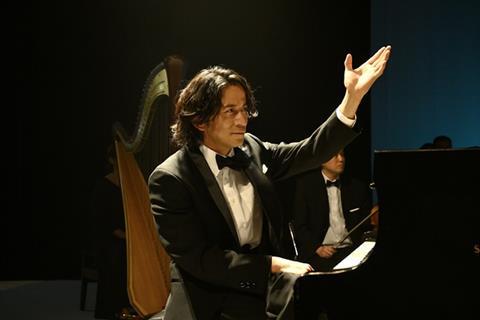
Sukiyaki cleaves fairly close to the well-established construction rules of the biopic, spanning over 40 years – between the Second World War and 1985 Japanese air disaster JAL123 – in the lives of the three musicians who created the global hit. We first meet Hachidai Nakamura (former V6 boy band member Junichi Okada, also seen in Takashi Yamazaki’s The Eternal Zero), a jazz pianist and junkie who learnt the instrument from his Jewish teacher in 1943 and who becomes a song composer. Memoirist Rokusuke Ei (Tori Matsuzaka, Yukiko Sode’s All The Lovers In The Night) is a writer and activist who finds power in words that he eventually turns into lyrics. And Kyu Sakamoto (Taiga Nakano) is a shy kid from Kawasaki and budding singer looking for a career-making break.
Fate brings the trio together to record ‘Sukiyaki’ in 1961, and after it tops the Billboard chart in 1963 they’re dubbed 689; a kind of proto-Beatles for their massive popularity in Japan and surging profile worldwide. 689 has reached pop music glory by the one-hour point of the film, leaving the rest of Sukiyaki to bask in its biopic melodrama: there are wartime bombing raids; violent tensions between student protesters and police in the 1960s; resistance to American policies in Japan; wives to fuss over them, chiefly Hachidai’s wife Junko (Nana Seino); and, of course, personality and artistic clashes among the three men. These lead to betrayals, hurt feelings and, finally, forgiveness and a triumphant reunion concert before Kyu perishes in JAL123.
Sukiyaki is frequently facile in its overt explorations, if they can be called that, of wartime trauma, mental health issues, addiction, family tragedy, vulnerability and forgiveness. Yet, even with a heaping helping of sometimes ostentatious emotionalism – Okada, for example, plays Hachidai’s early drug problems and later psychological distress as big as the screen will allow – the film deserves credit for making the men’s friendship the backbone of the story. This, in turn, makes many of the music sequences sing.
Those are also helped along by a scene-stealing turn from Nakano, who makes Kyu’s crooner charm entirely believable and his heart-on-his-sleeve sincerity endearing rather than saccharine. He manages to capture some of what made the approachable Kyu and his original rendition of the song such a galvanising cultural moment. If anything, Sukiyaki is too innocuous at times, shot in flat, if vibrant, full colour and falling back on the film’s feel-good factor, which should take it a long way nonetheless.
Production companies: Nippon TV, Ax-On
International sales: Nippon TV, ntv.co.jp
Producer: Aki Ko
Screenwriter: Takehiko Minato
Cinematography: Kenji Tominaga
Production design: Kazutsugu Shishido and Eri Shima
Editing: Hiroshi Matsuo
Music: Masaki Hayashi
Main cast: Junichi Okada, Tori Matsuzaka, Taiga Nakano, Nana Seino, Mone Kamashiraishi, Riisa Naka, Tao Tsuchiya, Riho Yoshioka, Tomoya Mane, Hiroshi Abe, Hiroko Yakushimaru