











The actor returns as the titular stuntman in this sequel to Quentin Tarantino’s ‘Once Upon A Time In Hollywood’
Dir: David Fincher. US. 2026. 140mins
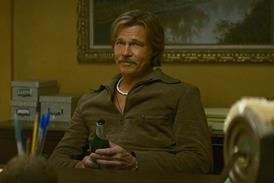
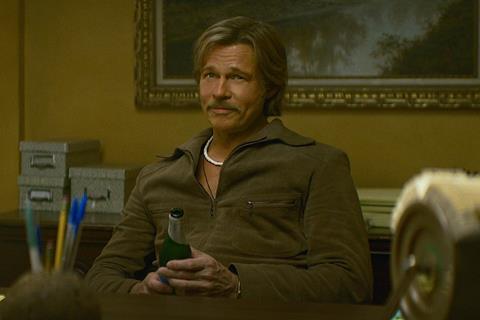
The Further Mis-Adventures Of Cliff Booth brings together the meticulous direction of David Fincher and the irreverent storytelling of Quentin Tarantino, resulting in an appealing shaggy-dog sequel to Tarantino’s 2019 film Once Upon A Time In Hollywood. Both artists’ strengths are clearly evident in a picture that focuses on the titular stuntman, but the film succeeds primarily because of Brad Pitt, who reprises his Oscar-winning role with an abundance of charm and a smidgeon of pathos as Cliff confronts a Los Angeles that is becoming unrecognisable to him.
Pitt reprises his Oscar-winning role with an abundance of charm and a smidgeon of pathos
Opening theatrically November 25 in the UK and US before streaming on Netflix from December 23, this highly-anticipated release is best appreciated as a confident busman’s holiday. Pitt is the only major actor from Once Upon A Time on board, but he is joined by a redoubtable cast that includes Elizabeth Debicki as a potential love interest. Because this crime-comedy boasts a hangout vibe that has its slack passages, Cliff Booth will likely not enjoy the same critical hosannahs as its predecessor, although many will check out this laidback lark because of the unlikely teaming of auteur heavyweights Fincher and Tarantino.
In the summer of 1977, Cliff Booth (Pitt) does odd jobs to support himself now that his longtime friend, actor Rick Dalton (Leonardo DiCaprio in the original film), has moved to Australia to star in a television show. Living with his elderly father Gus (Peter Weller), Cliff has aged out of stuntwork – but his vast connections ensure that he’s often asked to do ‘favours’ for those in the industry who need delicate situations handled. (As the film opens, Cliff negotiates with some lowlifes to retrieve a closeted director’s stolen items after they were burgled during a sexual tryst with a gay hustler.)
But Cliff’s life changes dramatically once he’s approached by Karen (Debicki), the agent of megalomaniacal TV star Charlie Peters (Scott Caan), who wants to meet with Cliff for unspecified reasons. Cliff is confused — Charlie does his own stunts — but he agrees to speak with him, falling for Karen in the process. Cliff’s courting of the reserved, whip-smart Karen drives the film’s narrative, and Pitt and Debicki radiate kinetic sexual chemistry. Pitt winningly exerts his character’s mixture of old-fashioned gallantry and rakish flirtation, but Debicki is every bit his equal as Karen wittily keeps Cliff at arm’s length.
With Cliff Booth, Fincher honours Tarantino’s maximalist aesthetic and colourful idiosyncrasies, although in the script’s shockingly brutal action sequences he applies the steely style that has been the hallmark of his own gripping thrillers. Nonetheless, by allowing Tarantino’s amusingly meandering dialogue to flourish, the director has created a warmer, more relaxed picture than is typical from this master of brooding tone.
Pitt slips back into Cliff’s skin with ease, again delivering a movie-star portrayal of a guy who never got to savour the limelight. There are shocks in store in terms of how Cliff has changed since Once Upon A Time that suggest that he has grown more amoral in the eight years since that picture took place. But Pitt comfortably incorporates these extra dimensions, balancing Cliff’s immense likability with hints of something darker.
As one would expect from Fincher, Cliff Booth is immaculately crafted, with production designer Donald Graham Burt marvellously capturing 1977 Los Angeles from Marina Del Rey to Mulholland Drive. Similar to its predecessor, the new film turns The City Of Angels into a collection of vibrant small communities and iconic landmarks, including the Tarantino-operated New Beverly Cinema. Choice period rock and R&B songs pepper the soundtrack, and Trent Reznor and Atticus Ross’s slinky noir-ish score recalls the spirit of classic 1970s L.A. thrillers.
Running 140 minutes, the picture does, however, suffer from some of the same issues as Once Upon A Time in that its sprawling narrative is overstuffed with digressions. And while Tarantino’s inclusion of racist and homophobic slurs is appropriate for the era, they nonetheless can feel egregious. Most disappointing is the reveal of why Charlie has sought out Cliff, which sets in motion an unconvincing narrative late in the story that’s not up to Tarantino’s high standards for twisting tales.
Still, Yahya Abdul-Mateen II is commanding as Roderick, a former football star turned actor, and Weller’s tender depiction of Gus hints at Cliff Booth’s acknowledgment of the passage of time. Throughout, people ask Cliff if the rumors about him are true — including that he beat Bruce Lee in a fight, one of Once Upon A Time’s more memorable scenes — and it’s apparent he experiences both pride and embarrassment when revisiting these old war stories. Like many ageing movie stars, Cliff knows how it feels to be a has-been and, amidst the picture’s grisly deaths and 1970s nostalgia, Pitt makes his character’s quiet melancholy cut through.
Production company: Plan B Entertainment
Worldwide distribution: Netflix
Producers: Ceán Chaffin, Brad Pitt, Peter Mavromates
Screenplay: Quentin Tarantino
Cinematography: Erik Messerschmidt
Production design: Donald Graham Burt
Editing: Kirk Baxter
Music: Trent Reznor & Atticus Ross
Main cast: Brad Pitt, Elizabeth Debicki, Scott Caan, Yahya Abdul-Mateen II, Carla Gugino, Peter Weller