











Hamnet’s co-writer and director on the connection to nature that changed her life
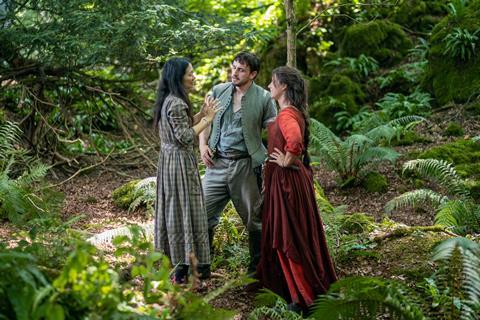
Unlike some of her actors and crew, Hamnet co-writer/director Chloé Zhao did not cry the first time she walked onto the set of the recreated Globe Theatre. “At the point when I walked in and saw it, I was thinking about logistics. How am I going to light this, or what can we do on effects up there? Because we couldn’t build it full height.”
Later, when she was filming from the perspective on stage, it unlocked something. “That reverence to William Shakespeare is something I know intellectually. But to be seeing from the perspective of Shakespeare, seeing what he’s doing for these people that are right there in front of him, then I understood the sacredness of his work in that moment in an embodied way.”
Not many filmmakers would follow Marvel’s Eternals with an intimate portrait of the great Bard and his wife struggling with their grief in 1580s England. Zhao says it all makes sense in her personal journey – she certainly does not see this as only a story of loss or a glimpse into the life of a literary lion.
Zhao had been exploring ideas of masculine and feminine during Eternals and wanted to further investigate that in Hamnet. “What I’ve been looking for is figuring out the two energies inside of me – male, female – trying to find harmony and co-existence,” she says.
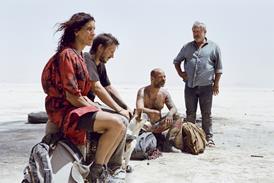
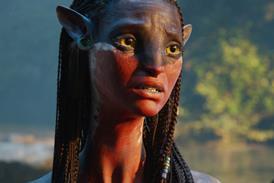
Both Eternals and Hamnet end with “a man and woman looking at each other and seeing each other. In the case of Eternals, they know they should save the planet. In the case of Hamnet, they are experiencing the release and the catharsis.”
She sees Eternals and Hamnet as the first two parts of a trilogy. “The third film will also be playing with these two polarities… in what form, in what genre, I don’t know yet.”
The masculine and feminine are always in every person, Zhao believes, and come to light in Hamnet. The adaptation of Maggie O’Farrell’s lauded 2020 novel, which she co-wrote with the author, examines the family of William Shakespeare (Paul Mescal) and his wife Agnes (Jessie Buckley), who experience the tragic death of their son Hamnet (Jacobi Jupe). It inspires the famed playwright to pen his masterpiece Hamlet. Zhao says she worked with Buckley and Mescal not as a pair but “always individuals”.
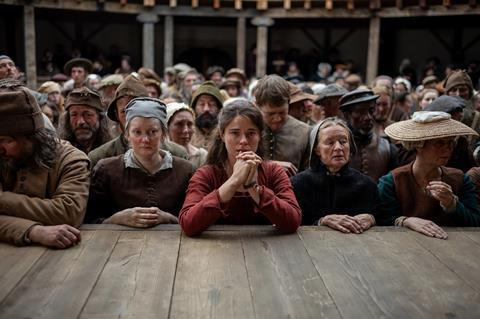
“I encourage them to go to polar opposites,” she says with a grin. “I want to see where the tension is because, without tension, it’s boring. We see two people so polarised in how they see grief, they can’t see each other. But then, through the power of storytelling and the communal experience, they’re able to break through those last 15 minutes onto the same frequency for the moment when they look at each other.”
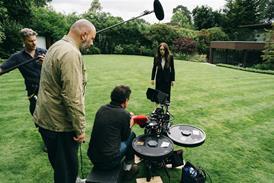
Zhao had not briefed Buckley on how far to take the scene when Agnes realises her son has died because “I almost never tell my actors where to go”. Buckley had selected music for Zhao to play on set and that helped the “ecosystem of the cast and crew become harmonised. Everyone was carrying their own heartbreak; I could feel my bones rattling. A few takes in, that scream came out of Jessie.”
Mescal is an actor who Zhao says is “so technically brilliant, so trained,” but she supported him coming into Hamnet to explore “new modalities, like dream work or somatic drop-ins before each take. Once you get him in his animal state, he’s so instinctual.”
Casting of the younger actors was also pivotal. “When I auditioned with Olivia [Lynes] and Jacobi [Jupe], I said, ‘Here’s the scenario, you’re twins, you’re very ill, and then you try to get help. No one’s helping, so you try to give your life to her by breathing with her. Go.’ And they improvised it,” says Zhao.
“It went pretty deep, pretty fast. Jessie used to joke that part of my superpower is disappearance. Casting is 80%, then you create an environment where everyone feels the desire to create. I’m just a tuning fork. And it’s more sometimes about tuning myself.”
Connecting with nature
It helps that Zhao edits her own films (on Hamnet alongside Affonso Goncalves). “So, when the director is flowing with the actors, the editor is always making sure [we have] what we need,” she explains.
The main editing challenge here was that she wanted the film to run longer; the first assembly was 160 minutes, compared with a final run time of 125.
“I had to kill some serious darlings; so many beautiful things with Emily Watson, with Joe Alwyn, with the kids. The play [Hamlet] was a lot longer in the first cut.” She concedes, “It’s beautiful as it is.”
Audiences agree. After its Telluride world premiere and audience award in Toronto, the film has been cemented as an awards frontrunner. Released by Focus Features, it is produced by Hera’s Liza Marshall, Neal Street’s Pippa Harris and Sam Mendes, Amblin’s Steven Spielberg and Book of Shadows’ Nicolas Gonda.
Zhao’s first trilogy of features – Songs My Brothers Taught Me, The Rider and Oscar winner Nomadland – created a “connection with nature that changed my life”, says the director. In Hamnet, there is a magnificent tree that shares moments with the characters, from birth to death. Location manager Lindsey Powell found it in an ancient forest in Wales, where Zhao took cinematographer Lukasz Zal on an early scouting visit. She had just come from a forest in Ukraine, where her ex-partner – Joshua James Richards, who shot her first four features – was filming a documentary near minefields.
The so-called “black holes” of the Welsh forest, made by nature, reminded her of the landmine craters in Ukraine, and Zal started filming them even on their preliminary visit. “I realised it’s there in that compost that’s going to give new life,” says Zhao. “In Hamlet, Shakespeare wrote, ‘All living things must die, passing through nature to eternity.’”
Nature was also reflected in Johnnie Burn’s sound design, where the wind, rustling leaves or a bird singing in iambic pentameter, made it into the sound mix. “Johnnie even stuck his microphone in the compost, or he collected sound inside a person’s body, and mixed all of that with the sound of the forest. When you vibrate with the sounds of the forest or the sound of birds, you can start to hear yourself on the inside.”
With Hamnet, Zhao, who was born in China but moved to the US when she was 14, experienced her first time working with a predominantly non-US crew.
“We took a lot of people from The Zone Of Interest,” she says. “I love that movie and producer Jim Wilson helped me to bring in Zal from Poland and some other crew, like costume designer Malgosia Turzanska. Our hair and make-up designer Nicole Stafford was from Scotland, and we had a lot of Irish actors; most of the other crew were English. I think that was quite intentional, because we wanted to break out of expectations [with an English period drama about Shakespeare].”
As Zhao starts to contemplate the next film in her masculine/feminine trilogy, she says: “I feel like I’ve only touched the edge, I’ve only dipped my toe in the water.
“How many more skills can I learn? How many books can I read? How many new people can I work with? I want to find out more of all of this, to access the mystery.”





No comments yet