












Riseborough gives a fiercely committed and vanity-free turn in Paul Andrew Williams’s film as a woman on the margins of society
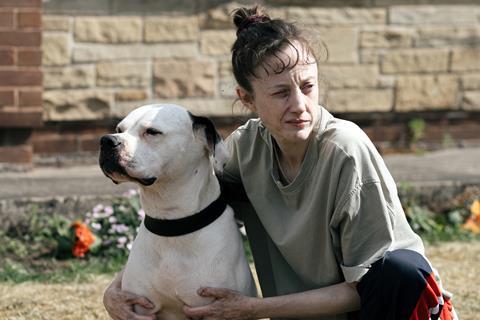
The complexity of neighbourly relations has proved a rich theme on screen this year, especially in the US, from Apple TV’s Your Friends And Neighbors and dark comedy Friendship to Netflix documentary The Perfect Neighbor. The topic is also explored in UK indie drama Dragonfly, in which the lives of two women in adjoining homes in northern England become fatefully intertwined.
Set in a scruffy corner of industrial West Yorkshire, Paul Andrew Williams’ film tells of an enfeebled widow named Elsie, played by Brenda Blethyn, who lives a largely solitary existence, punctuated by home care visits arranged by her otherwise neglectful son (Jason Watkins). When her younger neighbour Colleen, played by Andrea Riseborough, offers to do the shopping, she welcomes her kindness despite being unsettled by her large and intimidating dog.
A tentative friendship develops, one that discomfits Elsie’s son John when he makes a rare house call. The action he takes subsequently drives a wedge between his mother and her neighbour. The film premiered at Tribeca in June, and saw Blethyn and Riseborough jointly rewarded for best performance in an international narrative feature.
“I knew straight away when I read it that I would like to be a part of it,” says Riseborough of Williams’ film, whose genre-blending combination of social realist and psychological thriller elements saw further festival outings at the likes of Karlovy Vary and Edinburgh. “It’s so rare to find scripts that are pure imaginings, and the characters were so beautiful and clear. It was such a natural piece of storytelling, like this egoless tale that had tumbled out of him. He’s such an incredible director, so the process was really enjoyable.”
Both Elsie and Colleen are isolated by their circumstances, with the former dependent on home help and the latter reliant on government assistance. That characters of their ilk are often equally marginalised in mainstream screen drama strikes Riseborough as “deeply unfortunate”.
“Film is so used to representing a very narrow portion of society,” she says. “These people may seem marginalised in some way, but they actually represent a lot of people in this country and lots of people in the world.” Elsie and Colleen are “complicit in loneliness for different reasons, one through age and the other through upbringing. They’re living next to each other in such close proximity, and they’re going through something similar.”
Dark days
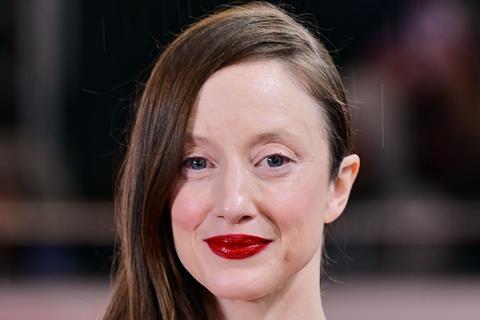
Dragonfly’s ultimate “savage and unsettling tonal swerve” – in the words of Screen International’s senior international critic Wendy Ide – may have shaken some of those who saw the film when Conic released it in the UK in November.
Riseborough, though, feels the tough climax is a logical consequence of everything that precedes it. “A huge part of Paul doesn’t want any ill to come to these characters,” she says of a filmmaker whose 2006 debut feature London To Brighton saw him nominated for Bafta’s award for special achievement by a British filmmaker in their first feature.
“He wants them to have a beautiful friendship and for it to be a glorious fairy tale. But it would have been inauthentic of him not to listen to what might happen given the circumstances. It’s a reflection of things we see on the news, and in life, and Paul doesn’t shy away from that authenticity.”
Almost three years have elapsed since Riseborough’s surprising-to-many lead actress Oscar nomination in 2023 for To Leslie, arising after a celebrity-powered grassroots campaign that led to Ampas tweaking its lobbying guidelines. Yet while the actress remains grateful to receive that endorsement – “it’s such a lovely thing to be recognised by your peers” – she says it is “the same as always” when it comes to offers.
However, roles have been steady and plentiful. She plays alongside Stephen Graham and Anson Boon in Jan Komasa’s Toronto premiere Good Boy, and as one of Kate Winslet’s siblings in Goodbye June, the Titanic star’s Netflix-backed feature directing debut. Riseborough holds awards season pile-up accountable for a spate of ubiquity that was only compounded by her being nominated alongside Blethyn for joint lead performance at the British Independent Film Awards and a six-week stage run at London’s Old Vic in Tracy Letts’ Mary Page Marlowe.
A degree of autonomy may be achievable in the future now that she has become her own producer, with the self-steered likes of 2018’s Nancy soon to be followed by a film about Isabella Blow, in which she will star as the UK fashion editor and muse.
“It’s an arduous, almost thankless task,” says the actress of the producing role. “But what’s wonderful is, at the end of it, you get these gems that may otherwise have been lost.”





No comments yet